No. 113: THE ART AND HISTORY OF BREWING STUMP JUICE – FROM THE PHONECIANS AND THE ANCIENT MARINER, ONTO THE SILK ROAD, THEN TO BENJAMIN FRANKLIN

by Raji Singh

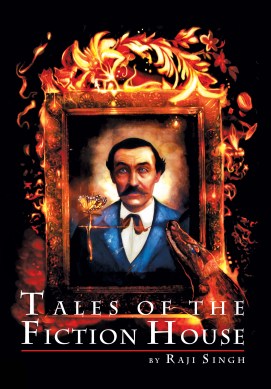
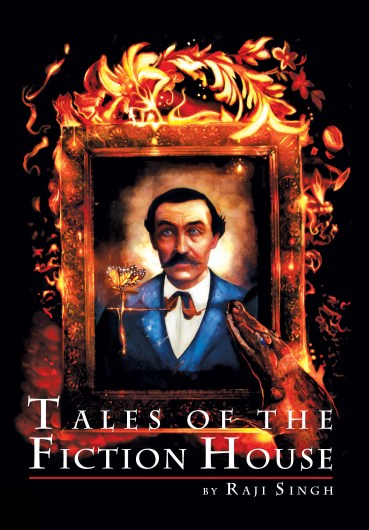
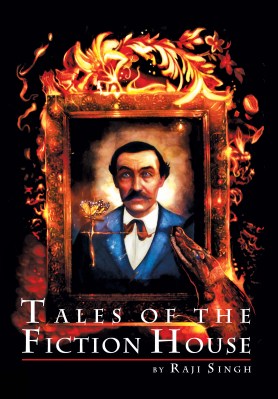
Our Founder, James Thaddeus “Blackjack” Fiction  ‘Tell our stories, Raji. If you don’t, it will be as if we never lived.’ These whispering cries of joy and sorrow rise from the bookshelves and portraits in the Fiction House. I cannot refuse. (Artwork enhancements by: Joseph Rintoul)

Our Founder, James Thaddeus “Blackjack” Fiction
‘Tell our stories, Raji. If you don’t, it will be as if we never lived.’
These whispering cries of joy and sorrow rise from the bookshelves and portraits in the Fiction House.
I cannot refuse.
(Artwork enhancements by: Joseph Rintoul)

I brew up stump juice with the passion of an oenologist. That’s a fancy-schmanzy name for a winemaker. As with the nectar of the vine, there are endless styles and varieties of the juice-de- stumpe. To make merry with your senses is but the drink’s only desire: Infinite bouquets waltz the olfactory; tantalizing piquancy tango the taste buds; biting textures fandango live-ely down the throat; this slow, close dance caresses your heart. The resulting rhythmic, “thump-thump”, resonates hypnotically in your thoughts.

Nirvana!

Tenille tells me, often, kindly. “I’ll buy my vino at the store, thank you. Just be sure, Raji, that you keep your juice-de stumpe in the basement well above the childrens’ reach.”

“Yes, Dearest.”

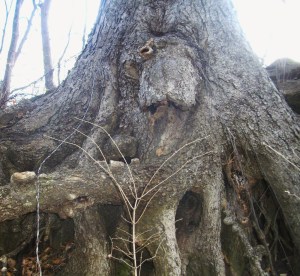
A vintner practices vinification; a stump juicer – stumpification. To participate in this fine art one need only a hollowed out stump, preferably one naturally age-weathered, and of hardwood origin – oak, or softer omega 3 rich walnut; and, yeast, a small fire, clear water (rainwater before the days of acid rain), plus any number of ingredients Mother Nature has borne.

For residents of the Fiction House, brewing the combination beverage-elixir-aperitif is a culture and tradition dating back over 200 years – from the forest outskirts of Paris, to the Lindian Woods – from the mid-west Flint Hills, to Kentucky mountain hideaways. Each region’s unique wood, climate, and water, creates different tastes.

Our Fiction House pride, joy, and specialty are the Kentucky stump juices. They are clear, rich, and potent – whether they’re the alcoholic or non-alcohol line.

A Perfect Vessel for Making Stump Juice (Photo by Mark Rogers, 2014)

A Perfect Vessel for Making Stump Juice
(Photo by Mark Rogers, 2014)

Doubtless, the culture of brewing stump juice dates back thousands of years. Archeologists for Fiction House Publishing continually find evidence of its practice among humankind’s ancient ancestors from along the Nile, and among our Phoenician sister and brethren. Phoenician sailors took portable stump juicers along on their boats – to brew it in transit. On the Silk Road, accounts of smoking camel backs, are prevalent – ‘demonstrator’ stump juicers used by traders to help market the liquid, the juicer, and ingredients.

     By next week, the Archeologists will have their research complete. Then I will be able to introduce everyone to the Ancient Mariner. He was one of the highest-respected residents of the Fiction House. He is the seaman who took in my great-great grandfather, James Thaddeus ‘Blackjack’ Fiction when great-great granfa was an orphan foundling. (Mariner too, had been a foundling.) Mariner’s stump juice recipe – via Dr. Benjamin Franklin.

NEXT WEEK: BENJAMIN FRANKLIN HAPPENS ONTO STUMP JUICE AND THE WORLD IS FOREVER CHANGED.

(Join me every Sunday night at the Fiction House, your place for short story, lark, whimsy, and merriment.  Meet the many residents as I archive their lives and centuries of adventures.  You can read of their origins in my novel TALES OF THE FICTION HOUSE.  They are completely different stories.  My novel is available at Amazon, (Kindle and Trade Paperback) and Barnes and Noble.)

©2014 Raji Singh

Posted in archeo-apologist, humor, satire, Short stories, Uncategorized, Whimsey | Tagged , , , , , , , , , | Leave a comment

THANKSGIVING AT THE HOME OF BENJAMIN FRANKLIN’S NE’ER-DO-WELL BROTHER

By Raji Singh

We at the Fiction House wish you the best of Thanksgivings!  Here is a bit of our whimsical past.

Our Founder, James Thaddeus “Blackjack” Fiction ‘Tell our stories, Raji. If you don’t, it will be as if we’ll never have lived.’ These whispering cries of joy and sorrow rise from the bookshelves and portraits in the Fiction House. I cannot refuse. (Artwork enhancements by: Joseph Rintoul)

Our Founder, James Thaddeus “Blackjack” Fiction
‘Tell our stories, Raji. If you don’t, it will be as if we never lived.’
These whispering cries of joy and sorrow rise from the bookshelves and portraits in the Fiction House.
I cannot refuse.
(Artwork enhancements by: Joseph Rintoul)

The Ancient Mariner, the scruffy sea salt who raised my great-great grandfather, told this curious holiday story.  It’s been handed down for almost 250 years.  Enjoy!

*     *     *

“To the GOOD life!”  Benjamin Franklin toasts.  A dozen of Franklin’s relatives, and a spiffed up Mariner, all “clunk” tankards.  They gather in the Philadelphia home of Franklin’s half-brother Franklin Ulster.  The men, all finely dressed in vests and jackets:  The women, in best subtle gray long dresses.    

     Ulster’s already woozy having sneaked many-a-nip to help cope with Benjamin’s incessant boasts.

They give thanks, sit, pass the food, and eat steamy sweet potato, tart cranberry compote – all the usual, with all the sweet scents of banquet, but turkey.  No one would dare offer up Ben Franklin’s noble favorite creature, which he backs as the new nation’s symbol.

BETTER than any ale you’ve had, eh Ulster.”

The host limply nods.  On that, he must agree.

Franklin proudly thumps his chest and sniffs.  “A woodsy scent this batch has.  I must say, this is the BEST stump juice yet that Mariner and I have had the privilege of brewing.  Fitting nectar for the heroes of the Colonies who lie at rest in their Elysian Fields.  A place you shall need not worry of ever residing, being battle shy midst our Revolution.”

Ulster starts to defend his weapons merchant status, but his wife kicks his ankle under the table.  Brother-in-law Benjamin just might be convinced to float a loan to keep the creditors from the door.  The home, though not a hovel, is faked; garish below the surface.  Plaster of paris Louis XIV statues stand in for the real marble.  Sturdy walnut furniture is replaced with rickety pine lookalikes.

“Concerning our stump juice, as with all things in life, as I always say, Ben Franklin says, ‘Good, Better, Best.  Never let it rest.  Until the good is better and the better best.’  That’s what I always say,” Benjamin Franklin says.

“Oh you do,” Franklin Ulster challenges.  Ulster had pre-dinner fumed for an hour as the honored guest told of his Paris diplomatic exploits that help borne a new nation.  Now he’s caught brother braggart in a lie.  He maliciously spits out, “We both know those words you quote were written on the sign at Goode and Betty Bests Bakery when we we urchins.”

Benjamin squints down on Ulster through his bifocals, and calmly honeys a bun.

“And just who do you think sold them that adage.  Moi!  Mr. Ulster.  And for a pretty penny.  That coin built up through the decades made me the wealthy man I am today, Sir.  As I always say, ‘A penny saved is a penny earned.’”

Franklin Ulster grits his teeth, but Benjamin Franklin is just beginning his pillorying.

“I am truly sorry your Shoppes and various ventures failed.  If only you’d listened to my sage brotherly advice instead of wagering at cockfights.  You could very well be in the financial position I reside.  So, there!  F.U.”

Some of the younger ladies at the table attempt to hide their eyes with their handkerchiefs.  Some matrons titter at the bawdy inference.  Elder statesman, Uncle Benjamin smiles pleasantly at each of them.

Ulster abruptly rises and his brass cock belt buckle upends his plate, sending his Thanksgiving fare down the front of his pants.  “Damn you, Ben.  My name is Franklin Ulster.  I demand the courtesy of being addressed as such in my own home.  Not being treated as some bastard kin.”

“My full apologies Franklin Ulster.  In amends, let me personally serve you the escargot I’ve made for our repast.”  Benjamin Franklin nods to Mariner and Mariner kindly returns the courtesy.  “The Mariner taught me his special recipe when we first met in Paris.  It was the talk of all the French society.  The grand chefs of the city paid my friend quite handsomely for his recipe.”  Franklin goes to a rickety sideboard, and gets a clean dinner plate.

Franklin Ulster impetuously grabs it.  “Snails we eat to appease the grand Doctor Franklin.”

Benjamin Franklin responds, “You’d not offer eagle to those who want it for our national symbol.”

Ulster spits out the crawly foreign fare after the first bite and throws the full plate against the wall.  It smashes into a dozen shards.  “I’m off to slaughter a turkey.”

Before he gets to the door, the normally talkative Mariner, who has been quite quiet throughout the afternoon, shouts, “I’ve ‘ad enough of yer performin’, mate.  Show yer respectins’ for the honored Doc Franklin, F.U.”  The wiry, but sturdy seaman quickly intercepts Ulster, and in seconds, from the long sea line he always has in his pocket, keel hauls him, and hangs him from a ceiling post beam.  There he dangles until a leisurely meal is complete.

~ ~ editor note:  (Keel haul – to tie line to each arm and hang from the bow of the ship.)

The accounts that various Franklins relate in memoirs and letters in the archives of Fiction House Publishing tend to back the overall story. The reader must take into consideration, the Mariner, known for his proclivity for tale telling, and this is his telling, after all – he may have embellished his part in the holiday affair.

You may read A Thousand And One more of Mariner’s tellings in Tales of the Fiction House.  ~ ~

Happy Thanksgiving!

Sincerely,

Raji

© Raji Singh 2012

(Join me every Sunday night at the Fiction House, your place for short story, lark, whimsy, and merriment.  Meet the many residents as I archive their lives and centuries of adventures.  You can read of their origins in my novel TALES OF THE FICTION HOUSE.  They are completely different stories.  My novel is available at Amazon, (Kindle and Trade Paperback) and Barnes and Noble.)

©2013 Raji Singh

Posted in archeo-apologist, Fiction House Publishing, humor, Short stories, Uncategorized, Whimsey | Tagged , , , , , , , , , | Leave a comment

Post No. 112: SCBWI – CAMARADERIE AND COLLEGIALITY

by Mark Rogers

Our Founder, James Thaddeus “Blackjack” Fiction  ‘Tell our stories, Raji. If you don’t, it will be as if we never lived.’ These whispering cries of joy and sorrow rise from the bookshelves and portraits in the Fiction House. I cannot refuse. (Artwork enhancements by: Joseph Rintoul)

Our Founder, James Thaddeus “Blackjack” Fiction
‘Tell our stories, Raji. If you don’t, it will be as if we never lived.’
These whispering cries of joy and sorrow rise from the bookshelves and portraits in the Fiction House.
I cannot refuse.
(Artwork enhancements by: Joseph Rintoul)

This past weekend, on the campus of a University near Kansas City, I observed ecstatic adults exiting a conference hall. Why such passionate vibrancy? The varsity footballers hadn’t won that afternoon. The Royals barely lost the World Series just a week earlier.

The reason, I was to find out later, was that the 120 or so people had just attended an all day conference of the Society for Children’s Book Writers and Illustrators (SCBWI). They received priceless information and instruction by half a dozen editors, agents, or other writers on what it takes to be published in the 21st Century.

I learned, rather astonishingly, that this wasn’t a get together where the ‘pitching of ideas’ was an end all, be all for writers and illustrators. The conference – sponsored by a caring organization – featured knowledgeable, giving instructors. It was meant for those writers and illustrators wanting to build community.

“It was amazing,” one conference attendee I spoke with relayed. People were there to gain a genuine knowledge of their art and craft; not to just – I am paraphrasing – ‘get a foot in the door’.

I am not a member of SCBWI.

Once, I attended a seminar SCBWI sponsored. I paid the non-member higher fee. It was worth it! It was taught by New York publicist, Susan Salzman Raab. She writes a column for the SCBWI magazine. Ms. Raab’s was one of the most intriguing, informative one-day classes I’ve taken. She knew her trade – a true professional. She relayed that knowledge in a no nonsense manner to the seminar attendees. I learned invaluable lessons that day about handling publicity. I put them into daily practice at Fiction House Publishing.

(Kudos Ms. Raab, on your excellent book, An Author’s Guide to Children’s Book Promotion. I bought the 11th Edition new. It is now dog-eared, from ongoing use. It fits for adult marketing as well as for children and young adult books and illustrations.)

Are you a potential writer or illustrator? Find such positive and knowledgeable people to be around who will encourage your art and craft. There are many out there and they are willing to share.

*     *     *

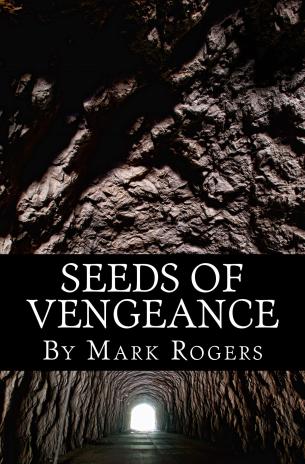
Mark Rogers, author of Seeds of Vengeance, and Raji Singh’s Tales of the Fiction House, is an Editor at Fiction House Publishing.

(Join me every Sunday night at the Fiction House, your place for short story, lark, whimsy, and merriment.  Meet the many residents as I archive their lives and centuries of adventures.  You can read of their origins in my novel TALES OF THE FICTION HOUSE.  They are completely different stories.  My novel is available at Amazon, and Barnes and Noble.)

©2014 Mark Rogers


Posted in Children, Fiction House Publishing, Uncategorized, writing | Tagged , , , , , , , , | Leave a comment

No. 111: WHY BUY THE COW, WHEN YOU CAN RENT IT FROM EFRAIM EPHRAIM?

by Raji Singh

Our Founder, James Thaddeus “Blackjack” Fiction  ‘Tell our stories, Raji. If you don’t, it will be as if we never lived.’ These whispering cries of joy and sorrow rise from the bookshelves and portraits in the Fiction House. I cannot refuse. (Artwork enhancements by: Joseph Rintoul)

Our Founder, James Thaddeus “Blackjack” Fiction
‘Tell our stories, Raji. If you don’t, it will be as if we never lived.’
These whispering cries of joy and sorrow rise from the bookshelves and portraits in the Fiction House.
I cannot refuse.
(Artwork enhancements by: Joseph Rintoul)

     Fiction House’s internationally renowned and imitated business endeavor of the 1890’s, ‘Engage a Bovine’: It all started when my Russian immigrant Great Grandmother Shelva Fiction queried Captain Polly who was tightrope walking the clothesline as they strung wet laundry.

*     *     *

   Shelva hangs the clothes while Polly pins them in place with her claw.

“Oh gootness, Polly Dear. What has become of mine sweet druzhyna husbant’s pants and shirts. We laundered and put them out to dry earlier this day? And my old housedress.” Shelva looks around. No sign of the clothing. Worry lines crinkle out from her mouth and eyes. “Vhat pray tell has become of the shawl I washed? It was a precious gift from the Czar.”

Captain Polly, her plumage a glistening opaque in Poppy Sol’s glare from on high, bounces on the clothesline. She opens her beak wide, and screeches, “Braak! Hang the Czar. From Moscow’s highest dome!”

Poppy Sol seems to wink clairvoyantly as a skinny cloud briefly blinks his light. ‘Indeed so, My Dear Bird. Just you wait.’

“Shush, Captain Polly,” Shelva orders. The Royal Family has spies even thousands of miles from Mother Russia.”

Shelva’s gaze drifts toward the distant pasture, disbelieving what she suddenly sees. “Vhat in the worlt’? Now what is our Efraim Ephraim up to? Is he fitting mine druzhyna’s trousers onto the Heifer? And vhat is that the Guernsey wears? My old dress, and… Oh, no I cannot believe it. The Czar’s shawl is around her neck!”

“Hang the Czar! Hang the Czar!”

“Shush, you.”

They quickly finish their chore. Captain Polly flies alongside Shelva as they hurry to Efraim.

“Vhat has got into you, Efraim Ephraim. Remove those clothes. Immediately.”

Efraim scratches his head, confused. “Now Mz. Shelva. You specifically told me to find a good use for these.”

“I meant, Efraim, for you to find someone, human, who is in need of them. Or for you to donate them to charity. Now, about the shawl! One of my most precious things. Oh, how could you, Efraim?” She removes it from around the cow. The four-leg beast moos in displeasure of losing something so colorful, so silky soft, so still sweet smelly from dried in fragrant wash soap.

Efraim scratches the whisker stubble on his chin. “But Mz Shelva. You throw your shawl on the ground and stomp it every time you mention the Czar.”

“That is why it is so precious, Efraim. I hated it from the very day the Czar presented it to me as a little girl. But Papa said I must accept. Foo on the Czar, I say. If I don’t have the Czar to grind under my heel, at least I have… Ach! Don’t you get me started on that fiend, Efraim.

“Why the duds? Why the duds?” interrupts Captain Polly.

Efraim glares at Captain Polly, angry at her for changing the subject and breaking Shelva’s Czar tangent. It might have kept him from explaining his bizarre behavior, which is a simple strategy to keep from having to do the milking so often.

Shelva says, “Indeed, Efraim. I insist you answer!”

Like a schoolboy caught in a mischievousness, Efraim kicks at the green pasture grass and avoids Shelva’s stare. He raises his arms skyward. “Day after day, Mz. Shelva. The milk. It never stops! I have nightmares when I sleep, that I drown in a sea of milk.” Embarrassed he’s revealed his emotions in front of the mistress of the Fiction House; Efraim stuffs his hands into his pockets and looks to her sheepishly. “I just can’t keep up with all the milking, Mz. Shelva. I thought I heard Doc once say that keeping warm helps slow the metabolism. Thus my dressing them.”

Ach! What nonsense.”

“Nonsense!” echoes Captain Polly.

Efraim’s avoiding stare shifts upward to the blue sky and he says, as if pleading to an all seeing, all knowing Poppy Sol. “But what can I do?”

Shelva’s eyes light up. “Efraim. I have an idea that combines the bests of Russia and the bests of mine new Amerika. We share with everyone the bounty of the cow: the milk, cream, butter, cheese, yogurt, curds and whey – the Russian way it will be when the Czar is gone and the people rejoice.” She throws down the shawl and steps on it, grinds it with her heel, kicks it.

The Guernsey joins in the Pasture Revolution and stomps it with her hoof. Captain Polly, who has been perching on a fence post swoops down, picks up the garment, and drapes it like a flag from the cow’s horns. “Braak! A cow of the people.”

Shelva ignores Captain Polly’s bravado and polemics.

“We mix the Russian way with the Amerika way, Efraim. We rent the cows out so people can do their own milking. They get enough to supply themselves, and their comrades.”

Braak!” chimes in Captain Polly. “The American way. The Russian way. Braak!

*     *     *

Epilogue:    

~ ~ The bovines are stripped of their raiment and the herd strolls happily naked in their lush pastures like all proud proletariat creatures. They provide milk happily ever after in surplus abundance, contented that they too do their part for the egalitarian masses.

~ ~ Shelva continues daily to stomp the Czar’s shawl and dream of the day she will one day make a return visit to her beloved Mother Russia.

~ ~ Captain Polly’s rabble rousing grows bolder each day. She soapboxes through the air spouting and squawking her Pasture Revolution. “More milk! Braak! Drown the Czar in your milk!”

~ ~ Shelva’s ‘Russian-American Way’ is the perfect detente for Efraim. Never will he have to touch another udder in his life. He has only to smile and happily accept the coins and dollars the masses slip into his hands to do their own milking.

Oh yes, he continues dressing cows. But they are miniature cows he carves, in all his free time between taking the money. He parlays his not quite fetish-hobby into another successful enterprise, selling them mail order to men throughout America, Europe, Asia, and even parts of Russia. They hang them from the mirror rear views of their carriages, carts, and rickshaws.

Fiction House’s Efraim Ephraim becomes father to a sort of My Little Brony movement of the late 19th century.

(Join me every Sunday night at the Fiction House, your place for short story, lark, whimsy, and merriment.  Meet the many residents as I archive their lives and centuries of adventures.  You can read of their origins in my novel TALES OF THE FICTION HOUSE.  They are completely different stories.  My novel is available at Amazon, and Barnes and Noble.)

©2014 Raji Singh

Posted in Fiction House Publishing, humor, satire, Short stories, Uncategorized, Whimsey, writing | Tagged , , , , , , , , , , , , , , , , , , , | Leave a comment

No. 110: THE GRASS IS ALWAYS GREENER IN A POTTER’S FIELD

 by Raji Sing

Our Founder, James Thaddeus “Blackjack” Fiction  ‘Tell our stories, Raji. If you don’t, it will be as if we never lived.’ These whispering cries of joy and sorrow rise from the bookshelves and portraits in the Fiction House. I cannot refuse. (Artwork enhancements by: Joseph Rintoul)

Our Founder, James Thaddeus “Blackjack” Fiction
‘Tell our stories, Raji. If you don’t, it will be as if we never lived.’
These whispering cries of joy and sorrow rise from the bookshelves and portraits in the Fiction House.
I cannot refuse.
(Artwork enhancements by: Joseph Rintoul)

Everyone knows the story of Johnny Hempseed.

In the 18th Century, a high-minded Benjamin Franklin commissioned J. H. to sow hemp seed throughout the land to grow the fledgling nation’s cordage industry. The present day taxing bureaus in the American states of Colorado, Oregon, and California are especially happy he did.

In the 19th Century, my great grandmother Shelva’s hired hand Efraim Ephraim, an avid though laid back arborist cultivated his own special grass in a unique way. It started a trend that led to a further greening of America.

It all began when Russian immigrant Shelva glanced out the kitchen window of the Fiction House.

*     *     *

“What the devil is Efraim up to now, Captain Polly?”

The colorful Macaw drops the sunflower seed she’s cracking and flies from her perch to Shelva’s shoulder to have a look-see. She rrrrrr trills contentedly when Shelva strokes her sleek plumage. They leave the house to investigate.

Efraim is in the sparsely foliaged Potter’s Field, a cemetery for indigents close to the Fiction House.  Over and again, he swings a walking stick at the ground. Turt is beside him, lunging with his beak-snout or fin-claws to seize the sumptuous grubs that Efraim’s motions dust-up. The sky is clear blue, but the ecosystem surrounding Efraim resembles a modern day smog alert. Calico is a few feet above Efraim’s head, warning off other passing butterflies that might accidentally flit into the cloud Efraim has created.

Our Friend Calico (©2013  Image by Joseph Rintoul)

Our Friend Calico
(©2013 Image by Joseph Rintoul)

“What in the world?” Shelva questions.

     “Aark! What in the world?” Captain Polly repeats. She spies an unearthed worm and flies to it. Nearly too late, Turt also sees it. They each grab an end and pull. Poor night crawler, it snaps in two and drizzles down the gullets of the Captain and Turt, like slithery spaghetti.

“You are desecrating hollowed ground, Efraim,” Shelva says. She sniffs. The surrounding air has taken on a scent of clover mixed with that of newly laid hay.

“To the contrary, Mz. Shelva. I am helping preserve it.” He continues swinging. The end of the stick makes a pucking sound when it makes contact with its roundish object-de-desire.

Shelva looks down and sees what Efraim is hitting in nearly continuous golf-like strokes. “Ach! Mine Gootness!” Shelva says, her Russian accent thickening. She covers her mouth with her apron, backs off a few feet, and brushes airborne flecks from her flower printed housedress. “Those are… those are…” She cannot bring herself to say the words.

“Cow pads,” Efraim answers for her. He stops his swinging so the dust may clear. “It’s like this, Mz. Shelva. If they’re not broken apart, being so rich they kill the healthy grass. Can’t you just see how dead this graveyard looks? But I’ll bring it back to life. When I knock the pads senseless into hundreds and thousands of bits, the barren dirt starts to green up.”

Shelva, Captain Polly, Turt, and even Calico seem to look at him crookedly when he says this.

“Oh, I know what you’re all thinking. But these are some of the purest, cleanest thngs in the world. Been filtered through four stomachs don’t you know.”

He pats dust off his khaki pants and shirt, causing the foursome to back away. He points to the lush green fields in the distance. “That’s the result of my work,” Efraim proudly says. “More grass for the Fiction House sheep and cows. And here in Potter’s Field, a not so desolate dirtscape so the residents may recline in a verdant peace.”

The foursome seems to simultaneously cough, or in Calico’s case flutter a little sideways. “Ach, Efraim!” is all Shelva is able to say.

Ach, Efraim!” Captain Polly repeats, flying to Efraim’s shoulder and flapping her wings into his face to clear the air. Turt trumpets shrilly to show his disdain too.

“It’s not like you all think,” Efraim says. “Just have to breathe a little lighter, on the backstroke, that’s all. Or better yet, just hold your breath.” He goes on to demonstrate and Shelva, Captain Polly, Turt, and Calico retreat.

*     *     *

Days pass. Shelva and Captain Polly look out the window. Sure enough, Potter’s Field is greening. Shelva, with Captain Polly on her shoulder, and Calico lighting on Captain Polly’s back, climb atop Turt’s giant shell. On tiptoes, Shelva examines the fields in the distance. They’re so thick in grass now, the cows and sheep are sluggish in their chore of bending their heads to eat. They’re beginning to bloat. ‘Hmm! Too much of a good thing?’ Shelva asks herself. “I’ve got to find a way to slow down Efraim’s swinging tirade,” she tells Captain Polly.

*     *     *

In a few more days, “I’ve got it Captain Polly,” she says as she sits in her rocking chair reading a magazine. Captain Polly perches on the headrest, perusing the words and pictures. “Golf, Old Girl.” Shelva sends a telegram, makes a trip to a department store. “Voila!” she says as she unpackages golf clubs, bag and purple and orange knicker pants, shirt and tam for Efraim in the Fiction House parlor. “You’re entered in the state’s upcoming golf tournament, Efraim.”

He just squints at the bright outfit and strokes the gleaming Mashie. “What is goff?”

“Goff,” Captain Polly mimics. “Efraim the goof off Goff.”

*     *     *

Comes and goes the tournament. 5 hole in ones, 12 eagles, 19 birdies. Efraim wins by 20 strokes.

Efraim never smiles during the four-day event.

Media from around the nation rush to the golf course to see this extraordinary man complete his extraordinary feat. The highest-ranking golf professionals – brought to their knees on the fairways and greens – crowd around to kneel at the feet of this unknown and learn his ways.

The call goes out at the 19th Hole, “Where is golf’s Savior, Efraim Ephraim?”

“There he is! There he is,” shouts a star struck lad. People follow him as he rushes outside and to a barbwire fence. On the other side amongst the cows is Efraim, driving and chipping to his heart’s content with his walking stick. Never again would he pick up a golf club.

Ah, but his influence and impact that day is never-ending. Golfers, arborists, gardeners, and herders utilize his training and fertilizing regiment to this day, creating an ever greening, verdant world.

(Join me every Sunday night at the Fiction House, your place for short story, lark, whimsy, and merriment.  Meet the many residents as I archive their lives and centuries of adventures.  You can read of their origins in my novel TALES OF THE FICTION HOUSE.  They are completely different stories.  My novel is available at Amazon, and Barnes and Noble.)

©2014 Raji Singh

Posted in archeo-apologist, Fiction House Publishing, humor, satire, Short stories, Uncategorized, Whimsey, writing | Tagged , , , , , , , , , , , , , , , , | Leave a comment

THE DISPUTIN’ RASPUTINS OF THE HIGH SEAS (AND THEIR WALK-OFFS)) – A HALLOWEEN SPOOKER

By Raji Singh

Our Founder, James Thaddeus “Blackjack” Fiction ‘Tell our stories, Raji. If you don’t, it will be as if we’ll never have lived.’ These whispering cries of joy and sorrow rise from the bookshelves and portraits in the Fiction House. I cannot refuse. (Artwork enhancements by: Joseph Rintoul)

Our Founder, James Thaddeus “Blackjack” Fiction
‘Tell our stories, Raji. If you don’t, it will be as if we never lived.’
These whispering cries of joy and sorrow rise from the bookshelves and portraits in the Fiction House.
I cannot refuse.
(Artwork enhancements by: Joseph Rintoul)

Unearthed from the tombs of the Fiction House, a Halloween re-treat.

*     *     *

The High Seas players:

The Pirates- a scurvy lot

Their Capt’n- a lice-ridden fiend

Captain Polly – Capt’n’s enslaved parrot

Turt- a good-natured land sea creature – almost a garnishment for the pirates’ meal

The Captives:  Buzzard, Mariner, R-r-rose Heather, Kunta- enslaved by the pirates.

The Walk-offs- The lopped off part of the foot, from the tip of the toe to ‘on back just a tad’.

(Buzzard is telling tall tales.  They mask the captives’ clandestine mutiny)

*               *               *

     Buzzard strokes the mast then pulls away with a dramatic flourish.  “Slick-as-a-badger, gents, Kunta slid down the mast, unseen by all but me.  Before I could get here to stop him, he tangled his feet ‘round the throat of your unsuspecting mate.  Wrung his neck.”

Buzzard invents as he tells.  By playing-into audience’s endless superstitions brought on by the fog and grog-life of the sea, he manipulates them into believers.

“Kunta’s the cunning deceiver that sliced out the Moroccan’s tongue.  Fed it to his ravenous Turt, who ingests our languages – to use against humans in the future,’ I’ll wager. [1]  That beak-snouted demon is heartless.  So Kunta cuts out the heart of the Algerian for him to devour while it beat.”

([1] Morrocan’s now a mute, driven mad by the cutting – so he can’t relay what really happened; that Mariner’s the slicer-dicer.)

‘A vile, contemptuous evil pervades the ship,’ thinks Captain Polly.  From her perch, she watches the sallow-faced crew.  Their attention never leaves Buzzard who is wending about the deck.  Parrot knows she must do something to save herself from the stealthy young badger-human Kunta and his shelled beast that her Buzzard warns of:  But, what?  With leg chained.  ‘Only hope,’ she thinks, is this dream-lover bird, Buzzard – but, ‘oh how to woo a human?’

“Kunta stalks,” Buzzard rails.  “LOPPING more walk-offs for his necklace; PLOPPING his victims overboard.  Some of the walk-offs are quick, devious.  They escape.  BEWARE!  These walk-offs gone-feral hate humans.  They lie in wait to destroy us.”

“What the Buzzard says gotta be true,” a pirate belly-aches to the others.  It’s after lunch.  They sit on crates near the railing – so they can vomit.  The Rasputin-of-the-word – Buzzard, his sly comrade Rasputin-of-the-poison, Mariner, has upped the dosage – just a smidgeon – so that the savvy-to-the-tricks-of-the-sea, dregs, don’t notice.  They think only, ‘the waves are having their way with gullets.’  They tremble continuously, and sweat so much that their raggedy limp clothes seem starched from saturating then drying so often.

(The poisons keep Capt’n stupor-fied.  The pentad of mutineers know he may prove an asset if alive.  One of them always guards him in his quarters turned prison.)

Crew’s superstitions beckon irrationality.  In their poison-induced hallucinations walk-offs come to life; stalk.  They begin believing they sail on what is becoming a ghost ship that may be overtaken anytime by the walk-offs.  As Buzzard spins his tale, the dregs mutter vows in a dozen languages, about skirting the mast after dark and keeping near the rail to avoid Kunta.

“That’ll never do,” Buzzard counters.  “Kunta and his shelled vampire straddle the ship’s sides, leaping on the unsuspecting.”  Dregs look warily over the rail, wishing for land.  It’s a thousand miles off.

The usually mawkish-squawkish Captain Polly is quiet.  ‘The monster walk-offs will see I am no dreg.  I will reason with them.  Teach them the humans’ many languages.  (Captain Polly knows at least a dozen.)  Oh so valuable I can be.’  None of Captain Polly’s self-assurances quells her horror of, while still alive, being plucked, de-beaked and de-clawed by Kunta and Turt.

When not stalking the deck with his flapping, Buzzard’s usually arguing in the galley with Mariner about the tactics of their tightly schemed mutiny.  But they agree, fully, with the results.

“How’d it get to this?” the crew whispers to each other.  “Turt’s curse, for ravaging his island for the shell and meat of his relatives?”  Others think hexing, by a tribal witch in retaliation for stealing Kunta.

Ominous signs of the walk-offs – stinking dried blood trails staining the deck – swell superstitions.  A once-tranquil voyage of plunder and pleasure is now, nightmare.  “Why’s our Capt’n keepin’ to quarters?  Even at his sickliest, he’s stayed the deck wielding his whip.  Why’s he issuein’ orders through Buzzard?”

Buzzard, in this short time, seems to have been elevated to acting Captain.  Many pirates are loyal to him – ‘only way to survive’ – as they struggle to man-the-ship to get close to land.

THE TALE OF MAMA L’S SECRET SLICKENS

Mariner, allowed enough chain to come up for daylight, listens to Buzzard’s tales from the galley doorway.  Captain Polly watches Mariner wipe fish blood from cleaver onto his neck-to-knee apron.  In futility, she gnaws her chain, wary of the time he might want her for a ‘fixin’.  From the first meal, he cooked – it smelled sweet as any Amazonian jungle cuisine –

– pirates shoveled it in.  When they spooned some into Captain Polly’s bucket, she sniffed, recognizing ingredients humans cannot.  (plants from Leezian’ bayou; recipes, come courtesy of Mama Lucy.)  Flying over the ‘Big Easy’ Captain Polly had seen their effect on critters.  They went battier than during a Gone Luna.  So now, Captain Polly is subsisting on the array of bugs flying close to her perch.  ‘Oh,’ growls Captain Polly’s stomach, ‘but to fly free of this ship.’

Mariner found the slickens – kegs of North Africa’s plants, almost cousins to poisonous Leezian’ claw-root and twig-lick – during his first day in the galley.  “One dasha’ claw banish evil spirits.”  Creviced old Mama Lucy had ‘scienced-up’ Mariner in her cabin’s kitchen-lab.  “Cure most ills.  Two dasha’ twig cures yer patient of inflictin’ devils.  Three-’a-each, ‘n the devil escape; slitheren’ inta another ta inhabitate.”

Mariner always uses two-and-a-half, insuring deferred insanity.  He can’t give three to finish the job – crew’s needed to get ship to shore.  If it appears madness may arrive before land, he lessens the dose.  For Buzzard, Rrrose Heather, her ladies and himself he prepares simpler fare.  For Capt’n, who killed most of Mariner’s dear friends from the commandeered ship, Mariner prepares meals with another cousin-berry – the dung-flower.

“Gaarente-ad’,” Mama’ll testify.  “Tuz cause most-vile hallucinatin’, yea inde-ad’.”

Mariner looks from Buzzard, who is finishing a tale, and glances at Captain Polly.  She imagines he’s saying, “Ready to join yer Capt’n, Captain?”  She gnaws shackle even more desperately.

TALE OF A SAIL

“Hoist starboard keel.  Set jig-rigging north, northwest.”  Buzzard mangles the orders of the ‘silent-Captain’, Mariner, rendering them illogical.  Doesn’t matter; bedraggled crew sails by rote.  No doubt, Rasputin-Buzzard steers the emotions of fear; Rasputin-Mariner helms the mayhem triggering it.

TALE OF HOW THE WALK-OFFS ‘REALLY’ CAME ABOARD

Late at night:  Cleaver descends.  “WHAP!”  A piercing scream, ‘THUMPS’, of running.  Scream stops with watery “PLOP”!  Someone yells:  “MAN OVERBOARD.”  In the shadows, Mariner wipes cleaver clean and oysters-out slimy walk-off from the tip of leather shoe.

All the crew now wears shoes.  ‘Does ‘em little good,’ Mariner grins.

From her manacled spot near the helm, Captain Polly quivers midst a new revelation:  ‘New Cookie’s got a key.  He can come for me anytime.’

Mariner eases back to the galley and re-shackles himself.  He stows walk-offs in the Capt’n’ humidor.  In a few days, as just another small way to nudge Capt’n closer to insanity, he’ll have Rrrose deliver it to Capt’n’ new quarters – a six by six dungeon-like room, rancid from 50 years of storing smoked mackerel.

Capt’n sleeps constantly, awakens only to his own screams caused by hallucinogenic dreams of sea creatures devouring him alive – more of the effects from Mariner and Mama’s ‘slickens’.

THE TALE OF A ‘GOOD’ LIFE FOR SOME

Buzzard, Rrrose Heather, and the ladies they now occupy Capt’n’ plush quarters.

“You’ll live with the bloody walk-offs throughout hell’s eternity,” Rrrose Heather, veiled as fortune tellers Capt’n always visited when in ports, soothsays to him – her personal revenge for what he’s done to she and her ladies.  She leaves the humidor with him in his dungeon.

THE TALE OF A ‘WORSE’ LIFE FOR OTHERS

Midst hot-cold sweats, Capt’n removes lid and reaches for a cigar.  The slimy walk-offs feel like jellyfish, their stench, worse than the rancid mackerel.  He pushes humidor.  Contents spill.  His eyes widen as hallucinations spiral into a parade of the moldy gray-green walk-offs tip-toeing to come choke him.  Too paralyzed to move, he screams, continuously, curdling-ly.  

     Reverberations echo through ship and shake the mast.  Crew looks up at the sails, expecting to see Kunta and his monster, their arms, fin-claws stretched in victory sign to show that they now control the ship.

Buzzard swoops from the ship’s wheel.  What to expect?  He is sure he’ll find Capt’n, dead.

Captain Polly hops on the wheel to steady the ship as Capt’n has trained her for times when an automatic parrot is necessary.  Though she loathes Capt’n, she feels pangs of sorrow.  That lasts just seconds.  She sings in an ecstatic combination of a half-dozen languages.  “Blow the man down, mate.  Blow the man down.  You gave us time, we blew the man down.”

The crew doesn’t share her joy.  If Capt’n is dead, hope for survival is with Buzzard.

‘Who will be at his mercy?’  Many silently vow ‘to become his slave if he protects them from Kunta and Turt.’  Captain Polly’s had enough of being a chained slave.  She has another idea.

Buzzard returns to the wheel, relieved that Rrrose’s act of revenge hasn’t killed Capt’n.  Captain Polly hops to his shoulder, brushes plumage sensually against his neck, gently nibbles ear, coos, “Lover bird.  Loverbird.  I’ll be true to you.”

© 2012 by Raji Singh

(Join me every Sunday night at the Fiction House, your place for short story, lark, whimsy, and merriment.  Meet the many residents as I archive their lives and centuries of adventures.  You can read of their origins in my novel TALES OF THE FICTION HOUSE.  They are completely different stories.  My novel is available at Amazon, (Kindle and Trade Paperback) and Barnes and Noble.)

©2014 Raji Singh

Posted in archeo-apologist, Fiction House Publishing, humor, satire, Short stories, Uncategorized, Whimsey, writing | Tagged , , , , , , , , , , , , , , , | Leave a comment

No. 109: BOOKTOBERFEST BOOK RELEASE: SEEDS OF VENGEANCE

(As a Booktoberfest special, we are selling Seeds of Vengeance e-books for $2.99 and trade paperback for $9.99.  (as soon as the systems update!) This will be good through the end of  October. We hope you enjoy this selection!

We at Fiction House Publishing are proud to announce our latest book,

SOV coverSeeds of Vengeance, a novel by Mark Rogers, Author and Editor of Fiction House Publishing

A near-death mining accident triggers J.B. Smith’s quest for the impossible – IMMORTALITY.

“Give me wealth, power, and offspring. I’ll destroy anyone challenging my empire.”

Impassioned union activist Stash Taluski protests: “We are children of the earth’s black bowels, Mr. Smith. You must look out for your brothers.”

“Never!”

Sally Pursells loves both men. She rises from deepest poverty to become J.B.’s closest advisor. J.B. provides Sally security, worldly comforts; Stash, raw-flesh desires. Sally bonds with their families. She’s as a mother to their children.

The relationships play out midst sly corporate boardroom bloodletting and brutal Appalachian coalfield riots. Can justice-seeking Sally achieve her impossible – reconciling two men so alike yet so different?

For the sake of her two families, she must.

(Hear Mark’s interview at Midnight Bookworm, Vin Smith, KCAA Radio, Los Angeles, California.  You will find it  34 minutes into the program.)

Trade Paperback: 268 pages

© 2014, Mark Rogers

General Fiction, American

Topics:  Coal Mining, Relationships, Female Empowerment, World War II, Union Organizing, Survival

(available at Amazon.com)  www.fictionhousepublishing.com

blog: www.talesofthefictionhouse.com


© 2014, Mark Rogers

Posted in Fiction House Publishing, Uncategorized, writing | Tagged , , , , , , , , , , , | Leave a comment

POST No. 108: BOOKTOBERFEST

By Raji Singh

Our Founder, James Thaddeus “Blackjack” Fiction ‘Tell our stories, Raji. If you don’t, it will be as if we’ll never have lived.’ These whispering cries of joy and sorrow rise from the bookshelves and portraits in the Fiction House. I cannot refuse. (Artwork enhancements by: Joseph Rintoul)

Our Founder, James Thaddeus “Blackjack” Fiction
‘Tell our stories, Raji. If you don’t, it will be as if we’ll never have lived.’
These whispering cries of joy and sorrow rise from the bookshelves and portraits in the Fiction House.
I cannot refuse.
(Artwork enhancements by: Joseph Rintoul)

October is National Book Month.  I wonder if any cities or countries have Book Parades, festivals, or Book Games to celebrate.  I hope you’ll enjoy this short scene from my novel, Tales of the Fiction House.  It is a child’s surrealistic discover about the joys of books.

*     *     *

It’s 1826, Cincinatti.  4-year-old orphaned foundling Carper is taken in by a sea-crusted ancient mariner.

In only a few minutes Mariner and Carper are at Mariner’s isolated ‘STATEROOM.’ A barnacle on the backside of an abandoned warehouse, the ten-by-ten foot wharf-shack juts out over the Ohio. It’s built of rancorous vegetable crate-wood. The river’s fishy odor is less offensive. Two nose-smudged porthole windows peep out. The oilskin tarp door groans a tired welcome when Mariner moves it. Inside, Carper scrunches his face and breathes cautiously.

One can see the sloshing water between inch-thick gaps in the planked floor. The structure sways like a ship in even moderate knot breezes and this makes it truly home for the Mariner. “I built ‘er seaworthy, Matey. Can launch this ‘skiff’ if I’ve a mind. Sail away wheres I choose iffa the city starts overtakin’.”

Firmly anchoring the wharf-shack are shelved books. They line the walls. Mariner can’t read, but pretends. For hours, he will stare at the print and mouth words he believes should accompany pictures.

You stare intently, entranced by the array of Mariner’s exotic objects never before this moment have you seen. BOOKS – bound in leather dyed blue, black, and red. The bindings’ wild animal pungency – primal; the pulp pages emit sweet, pleasant mustiness of the forest. These soothing scents overpower the wharf-shack’s odor. These scents, intoxicating, will draw you under their covers. Soon you will sleep. Dream. All their pages of excitement, knowledge, mystery will awaken a passion for life’s grandeur in you that never will dull.

There is no way that at this moment can your child’s mind perceive all you feel so deeply. You only experience…

The BOOKS: They begin leaping from the shelves. They slide down Harpoon. Its long face, snaggled with sharp-barbed tooth, is still gleaming with the sweet ardor of some past battle glory. When they reach the floor, BOOKS, in cadence begin marching round a three-legged stool and toward you. ‘Hup! Hup! Hup, hup, hup!’ In parade. Voices echo in unison, ‘JOIN US, CARPER. DON’T LET US PASS YOU BY!’

How do they know your name? Other books are open on rickety stands and on the floor. You smile as an artist’s drawing of a wiry pooch ‘WOOFS’ at you. On the page next to him, a little wooden boy dances clip-cloppity. You want to tweak his funny, ever-growing nose. But, ‘Ouch!’ You are afraid of splinters.

On the pages of a floored book, a pretty, golden-haired girl in a silver gown looks down from atop a leafy tree. She reaches for you. She has wings of silver, ruby, and gold. She reminds you of the butterfly that spent the night with you under the cart. You whisper, “Calico?”

Calico, The Patron Saint of Foundlings (©2013  Image by Joseph Rintoul)

My Friend Calico
(©2013 Image by Joseph Rintoul)

‘COME FLYING WITH ME CARPER!’ she sings. She swoops down, takes your hand, and off you go go go, landing on the picture’s cloudy mountaintop. You lock hands and sing, skip and play ring around rosy, pocketful of posy. Ashes, ashes… all…fall…

‘No! No! You fist your hand in defiance. The fire-breathing monster won’t eat me,’ your thoughts shout, as you partly remember the nightmare. You blink. No longer do you hold her hand. You’re still clasping Mariner’s.

“Ouch! Carper, you got a clam’s grip there,” Mariner says as he bends creakily and closes the fairy tale book. Butterfly girl winks good-bye. Carper doesn’t feel scared or sad. He feels protected by Mariner and this place. He can visit the butterfly girl any time he wants. He will find many joys like her in – BOOKS. Carper will have read and absorbed each one in this dry-dock library before he turns eight.

BOOKS. They will become his life.

Carper will grow up to become James Thaddeus ‘Blackjack’ Fiction, publisher and abolitionist. (See picture)

(Join me every Sunday night at the Fiction House, your place for short story, lark, whimsy, and merriment.  Meet the many residents as I archive their lives and centuries of adventures.  You can read of their origins in my novel TALES OF THE FICTION HOUSE.   My novel is available at Amazon, (Kindle and Trade Paperback) and Barnes and Noble.)

©2013 Raji Singh

Posted in archeo-apologist, Children's stories, Fiction House Publishing, humor, Short stories, Whimsey, writing | Tagged , , , , , , , , , , , , , | Leave a comment

No. 107: AN OCTOPUS GARDEN – PART III, FINALE

Raji Singh’s Lore of the Lindian Woods  

Our Founder, James Thaddeus “Blackjack” Fiction  ‘Tell our stories, Raji. If you don’t, it will be as if we never lived.’ These whispering cries of joy and sorrow rise from the bookshelves and portraits in the Fiction House. I cannot refuse. (Artwork enhancements by: Joseph Rintoul)

Our Founder, James Thaddeus “Blackjack” Fiction
‘Tell our stories, Raji. If you don’t, it will be as if we never lived.’
These whispering cries of joy and sorrow rise from the bookshelves and portraits in the Fiction House.
I cannot refuse.
(Artwork enhancements by: Joseph Rintoul)

     Torn from her home by a tsunami, young Ollie Octopus comes to live in the Lindian Woods pond. She cannot leave it and return to the sea. She would be out of water far too long and would die.

*     *   *

Question: I have three hearts – all are breaking because I’ve lost my family. Eight arms – and my sense of suction touch with them is keener than that of any creature. I taste with that touch. I change colors as camouflage. Voila! Now you see me, now you don’t. This is how I protect myself. Everyone knows I tend the most beautiful garden on land and in the water: Why! Because gardening helps heal my aching hearts. Who am I?

Answer: Ollie Octopus.

*     *     *

Ever the optimistic Octopus, Ollie anxiously asks Turt as he returns to the pond after his ocean journey. “Did you find my home and family, Turt?” Ollie studies his massive, multi-tattooed shell, in vain, for any graffiti messages relatives may have left her.

Turt nods, bowing his beak snout so he doesn’t have to see the hurt in Ollie’s eyes.  He tells her, “I am sorry Ollie. No, I did not. But those who live in the oceans are often connected. One day, on one of my journeys, I may meet a creature who knows them. And then, I will host the grandest reunion for you.” Turt thinks, ‘But how could I ever get her to them, or they to her?’

Welcome to the Lindian Woods  (Image ©2014 Raji Singh

Welcome to the Lindian Woods
(Image ©2014 Raji Singh

Ollie holds back tears and returns to tending her half in the water and half on the bank garden. Her arms move wildly and she cultivates eight plants at once. She strokes each fruit and vegetable with her suction touch to tell whether it is ready to eat. She finds some release from her sadness in the tart, sweet, or spicy touch of the crop. She whispers to herself, “I miss my family. I’d love to go home.”

Other creatures hear and feel bad for her. All of them like Ollie and want her to be happy in this, their home. Instead of saying, “There, there, Ollie, you’ll feel better soon,” they keep Ollie company by helping her do gardening.

The Frog Brothers, Frer and Brer chase bugs from the hydroponic tomatoes. The Ten Otters furrow through the rows of plants to keep weeds down. Hawk continuously swoops down swooshing withered berries from bushes so healthy ones may thrive. Captain Polly, clutching in her talons a Big Swig Styrofoam cup that humans had littered in the Woods, scoops water and drizzles it on naked buds as she flies overhead. The Toad Sisters push compost leaf fertilizer atop tender green stalks. The Beaver Boys dam an area to expand the fragrant water lily pads yellowing, reddening, purpling, and perfuming the pond.

From just above the Octopus Garden, Butterfly Calico flutters, “Exquisite!”

Calico, The Patron Saint of Foundlings (©2013  Image by Joseph Rintoul)

Ollie’s friend Calico
(©2013 Image by Joseph Rintoul)

‘We are truly the Lindian Woods Community Garden,’ Turt thinks.  He  shows Ollie minute seeds he holds in his fin claws. He’d harvested them from sea plants and tucked them in crevices in his shell to transport them back to the Woods. “These will grow to be wonderful additions, Ollie. I don’t know what they are. But I’m sure you’ll recognize them when they sprout.”

At that moment, they hear rustling in the Woods: Humans, maybe fishermen. They’d be sure to see a creature so out of place as Ollie. But the Octopus is one of nature’s wisest. Ollie extends her long arms. She changes from her normal gray to the brown colors of the Woods. She remains so still, she appears petrified. The humans out for a nature stroll  look right at her and pass her by.  They think she is a tangle of tree roots at the edge of the pond.

Dozens of times Ollie will use this camouflage technique to avoid the two-legs, as the animals call humans. The disguise never fails her.

*     *     *

Years pass in the Lindian Woods. World traveler Turt makes many trips around the oceans. He always tries to find out about Ollie’s relatives, but sees nary a trace of them. Ollie grows old and contented as she works in her Octopus Garden amongst so many Woodland friends.

SANYO DIGITAL CAMERA

Ollie, the Octopus of the Lindian Woods (photo by Mark Rogers)

One day, as with all animals, plants, and two-legs must, she dies. All her friends smile when they hear her last whispered words, “I’m home. I’m truly home.”

Ollie is in the Lindian Woods to this day. Look close at those roots along the pond’s edge when you visit the Woods. You will see Ollie. She’s waiting for you there.

(Join me every Sunday night at the Fiction House, your place for short story, lark, whimsy, and merriment.  Meet the many residents as I archive their lives and centuries of adventures.  You can read of their origins in my novel TALES OF THE FICTION HOUSE.  They are completely different stories.  My novel is available at Amazon, and Barnes and Noble.)

©2014 Raji Singh

Posted in Children, Children's stories, Fiction House Publishing, humor, Short stories, Whimsey, writing | Tagged , , , , , , , , , , , , , , , , , , | Leave a comment

No. 106: AN OCTOPUS GARDEN, PART 2

Raji Singh’s Lore of the Lindian Woods

Our Founder, James Thaddeus “Blackjack” Fiction  ‘Tell our stories, Raji. If you don’t, it will be as if we never lived.’ These whispering cries of joy and sorrow rise from the bookshelves and portraits in the Fiction House. I cannot refuse. (Artwork enhancements by: Joseph Rintoul)

Our Founder, James Thaddeus “Blackjack” Fiction
‘Tell our stories, Raji. If you don’t, it will be as if we never lived.’
These whispering cries of joy and sorrow rise from the bookshelves and portraits in the Fiction House.
I cannot refuse.
(Artwork enhancements by: Joseph Rintoul)

Last week: A tsunami sweeps young Ollie Octopus far from home, to the vilest of places, a garbage dump. To survive, she must reside in a discarded water tank. Bulldozers prepare to bury the area.

Little does Ollie know; the patron saint of foundlings, Carpier, watches over her. Of Carpier, a 7th century Lindian mystic, it is said, “He can change to any form, human, or beast, to aid foundlings. Most notably, he becomes the gentlest of creatures, a butterfly.”

And now

The Rescue

“I shall find you a safe home, Ollie,” Squirrel says to the foundling Octopus, as he looks down from atop the water tank.

Squirrel leaps skyward and spins like a tornado. Ollie and all the other dump creatures, snakes, rats, wild cats, watch entranced as the brown of his funnel cloud quickly melds into the brightest oranges, blues, and reds. Just as magically, he continuously rises, instead of gravitating back to earth. Then with a poof sound, he transforms, becoming the butterfly, Calico. She flutters off, toward the Lindian Woods to find the one creature she is sure can help the Octopus.

It is Turt, who relaxes on the pond’s cool bank. He’s cracking nuts in his powerful beak-snout to give to sickly Woods creatures. His slippery, foot-long pals, The Ten Otters, play a game of King of the Mountain atop his mighty shell. Calico communicates to him through her antennae vibrations. “Come quickly, Turt. One who is of the sea is land-bound, and needs help.”

Turt To The Rescue!

The river isn’t far off. Turt submerges all but his football size and shape head, and swims in the direction Calico leads. Turt is slower than most creatures, on earth. Few are as fast in water though, except The Ten Otters, who secretly follow at a distance in quest of adventure.

Reaching the dump, they see the bulldozers rumble toward Ollie’s sector. Turt scrunches his nostrils and surveys the hilly terrain. Turt trumpets to Calico. “I’ll never get to her in time, unless…unless I do as when we rescued the shelling tortoises trapped down in the cavern.”

Calico winks. She remembers.

Calico, The Patron Saint of Foundlings (©2013  Image by Joseph Rintoul)

Calico, The Patron Saint of Foundlings
(©2013 Image by Joseph Rintoul)

She spies The Ten Otters, hiding behind underbrush. She vibrates orders to them. “You loungers! Come help Turt.” They rush to him. She vibrates instructions and adds. “Now hurry Otters! No time to waste.”

The Ten Otters grunt, squeak, and squeal as they crawl beneath Turt and push with the tops of their heads. They climb atop one another so they can push him further up. A couple of times he almost falls on them. That surely would be a crushing blow. But after a few minutes, the Otter jacking up process succeeds. As they balance Turt sideways, Calico flutters near. Her slight breeze is just enough to begin Turt rolling downhill. He’s an accelerating disc. The Garbage heaps look like somersaulting mountains to him. Dark earth and bright sky churn, becoming a buttery yellow.

The excitement of the spiral journey overtakes Turt. “Whee!” Clunk! Clunk! He bounces over rocks.

Splat! He pulverizes sage, lavender, and wildflowers, perfuming the wretched stench of the dump with a bouquet of pleasant aromatic scents. Turt speeds alongside the bulldozers. The drivers blink hard, disbelieving what they see. Just as one of the dozers readies to crush into Ollie’s tank, Turt leans hard to the right, changing directions. He cuts in front of the bucket-mouth. He bumps Ollie’s tank, tipping it directly at the dozer’s steel teeth. The tank breaks. The water, along with Ollie spits upward, just as Turt calculated.

But Ollie couldn’t know this.

Her rubbery arms flail wildly. She closes her eyes and prepares to be flattened like a stingray.

Turt trumpets out. “Land on me, Ollie, I’m right below you.”

Ollie opens her eyes. Instinctively she suctions her arms to the sideways turned dome of his shell. She appears a protruding gray hubcap as Turt loop-de-loops safely away from the machines. He has far to go, since he’s still on an incline. Ollie’s getting dizzy. She crawls to the perimeter of the shell. She must do a crazy eight-armed dance to keep balanced. The dizziness passes.

Finally, they hit flat land. Turt teeters like a coin that no longer can stand on its side. He and Ollie thud, stirring dust. They can barely breathe. Still it’s a ten-minute Turt slow walk to the river semi-circling the dump.

One of the dozer drivers, curious about what he saw, followed the rolling pair. He rumbles, ever closer to the land stranded creatures. Turt knows he and Ollie are an oddity and are about to be scooped up, to be displayed at some jailing zoo.

This time – The Ten Otters To The Rescue.

Calico had directed them back to the water, and they torpedoed to where Calico led.

They rush from the water. Eight of them grab Ollie’s arms. The other two crawl beneath her. As if Ollie were a living palanquin, they rush her away from the oncoming dozer. They get her to the water.

But Turt! What of Turt? Otters and Octopus look from the safety of the river. The machine is snorting and charging. Turt is trumpeting wildly, lashing out with his fin claws at the bucket mouth trying to capture him. Calico distracts the driver by flitting around his face.

The Ten Otters and Ollie think it is hopeless for Turt, but Turt seizes one of the dozer’s glistening steel teeth in his beak snout. The bucket lifts him. Turt holds tight. He leaves the ground, and then he lets go. Just as he expected, the bellowing monster keeps coming. Calico bothers the driver so much that a wrong lever is pushed. Instead of scooping Turt, it pushes at him, sending him rolling on his side again, toward the river.

The dozer chases Turt.

“Come on Turt. You’re almost home,” he hears his friends chant. He begins teetering before reaching water. The over-anxious dozer chomps wildly. It bumps Turt hard, propelling him, splash, into the water sanctuary. Turt hisses excitedly at the machine. It becomes stuck in the riverbank mud, belching dead-dinosaur smells as it tries to free itself.

Calico vibrates to Turt, “Well executed, Sir.”

Welcome to the Lindian Woods  (Image ©2014 Raji Singh

Welcome to the Lindian Woods
(Image ©2014 Raji Singh

“Likewise,” Turt trumpets in return.

Turt, Ollie, and The Ten Otters swim safely away, to the Lindian Woods. Calico flutters “Fare thee well, friends! I am off to watch over other foundlings.”

Next Week’s finale: Ollie finds a new home and begins building her grand Octopus Garden in the Lindian Woods.

(Join me every Sunday night at the Fiction House, your place for short story, lark, whimsy, and merriment.  Meet the many residents as I archive their lives and centuries of adventures.  You can read of their origins in my novel TALES OF THE FICTION HOUSE.  They are completely different stories.  My novel is available at Amazon, and Barnes and Noble.)

©2014 Raji Singh

Posted in archeo-apologist, Children, Children's stories, Fiction House Publishing, humor, Short stories, Uncategorized, Whimsey, writing | Tagged , , , , , , , , , , , , | Leave a comment