LIKE THE NEW YEAR, LIFE IS FULL OF BEGINNINGS

By Raji Singh

Our Founder, James Thaddeus “Blackjack” Fiction ‘Tell our stories, Raji. If you don’t, it will be as if we’ll never have lived.’ These whispering cries of joy and sorrow rise from the bookshelves and portraits in the Fiction House. I cannot refuse. (Artwork enhancements by: Joseph Rintoul)

Our Founder, James Thaddeus “Blackjack” Fiction
‘Tell our stories, Raji. If you don’t, it will be as if we never lived.’
These whispering cries of joy and sorrow rise from the bookshelves and portraits in the Fiction House.
I cannot refuse.
(Artwork enhancements by: Joseph Rintoul)

We at the Fiction House wish you a happy new year! When you need to escape, please join us  and Carper and fly into another space and time.  We wish you a year of health and joy….Happy New Year!

     *     *     *

On this new beginning, we remember the origins of our home, The Fiction House and James Thaddeus Fiction, our founder.

Out of the Fiction House Archives: THE CARPER’S TALE   (From Tales of the Fiction House)

1826 

Daylight for just 15 minutes and already summer’s heat has dried dew from the Cincinnati pier.  A stoop-shouldered ancient mariner in an age-cracked slicker gamily trudges the seemingly un-ending stretch.  Alone.  Sunken jaw ratchets, way to below Adam’s apple, as he grumbles,

“How long I gonna live?”

These would be the first words my great-great grandfa, four-year-old James Thaddeus Fiction, would remember hearing for the rest of his life.  From beneath an abandoned fish cart, he mimics squeakily, “How long I gonna live?”

Mariner looks about, swigs Kentucky stump juice to relieve an aching molar.  “Ahh!”  He squints curiously down at his fresh-caught carp wrapped in yesterday’s Cincinnati Daily Opine.

The boy echoes, “How long I gonna live?”

The sing-song reminds Mariner of albatross he heard while sailing around the Cape of Good Hope.  He clunks down his bamboo fishing pole and peers under the cart.  “Why, you little carper.  You just parrot me?”  He reaches for and reels into the sunlight a soot-covered boy still trembling from the night’s chill.  Mariner’s knobby knees blink at him through dungaree holes.

Our Friend Calico (©2013 Image by Joseph Rintoul)

Our Friend Calico
(©2013 Image by Joseph Rintoul)

A calico butterfly of silver, ruby, and gold had lit on the youth’s head.  “I see one of my friends been keepin’ ya company.”  Mariner winks at it as it flits away, “Happy sailin’, Calico.”  He bends to the boy. “So what’s youren name?  What you been rollin’ round in? And what in the name of Poseidon’s ocean you doin’ schoolin’ here?”  Sniff.  “Eew!  Yer rank as my giant pal Turt after e’s swum the Atlantic.”

Boy wants to say, “How can you smell me over your owen’ self?” Manages only, “Umm…”

Mariner squints at his first catch-of-the-day and grumbles to it.  “Likes that one too, I do. Don’t think I’ll throw ‘im back, either.”

Boy’s face crinkles prune-wrinkly as he flinches; not so much from being level with something looking so like the fire-breathing monster of the nightmare he’s just awakened from – wild silver hair, blood eyes, warty cheeks and knife nose – but from  the sour smell reeking from pebbly-textured mouth.

Everything before this moment – who he is, where he’s from, how long he’s been here – is blank, dark as his previously alabaster torso.  He wears only short pants with pockets hastily stuffed with childhood trinkets, marbles, tin soldiers, a spinning top.

Escaping bed and building during the fire.  His mother ferreted away.  Wandering aimlessly.  Collapsing here from fatigue.  36 hours have since passed.  For him it easily could have been 36 days or 36 minutes.  The wrenching scars his memory – as happens with most foundlings.  Yet, after all that, he doesn’t fear this living monster.

     “I said, what you doin’… Oh never mind.  I start you carpin’ and you look like the type’ll never clam it.”  He engulfs the boy’s hand in his bony fingers – arthritic from a lifetime of casting nets and setting sails – elevates him, until toes are level with his whale-bone belt buckle; surveys him as he would a catch.

A passing paddle-wheeler on the mucky Ohio steam-whistles out a baritone ‘ahoy’ to old salt and young dawg.  “Let’s sail, Carper.  My stateroom – she’s up the way.  I’ll get ya cleaned and chowed.  Then we can find youren.  Unless yer a stray.  You stray from the orphanage, Carper?  If that be, well…all the more power.   Believe me,” he rasps, angrily clenching fishing pole, rap, rap, rapping its hard butt against the dock….”I know first-hand how’s ya don’t wants to be in a place like that!”

The boy’s thoughts are blank as they walk and he clutches Mariner’s hand:  No happy or sad as he looks up into a face equally expressionless as his, only a primitive gratitude for the presence, for the touch of another human.

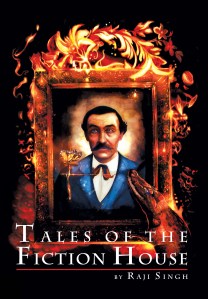
(Join me at the Fiction House, your place for short story, lark, whimsy, and merriment.  Meet the many residents as I archive their lives and centuries of adventures.  You can read of their origins in my novel TALES OF THE FICTION HOUSE.  My novel is available at Amazon, (Kindle and Trade Paperback) and Barnes and Noble.)

©2013 Raji Singh. (2020)

Posted in Uncategorized | Tagged , , , , , , , , , , , , , , , | Leave a comment

YOU WILL SHOOT YOUR EYE OUT, RAJI — A LINDIAN CHRISTMAS LESSON

Our Founder, James Thaddeus “Blackjack” Fiction
‘Tell our stories, Raji. If you don’t, it will be as if we never lived.’
These whispering cries of joy and sorrow rise from the bookshelves and portraits in the Fiction House.
I cannot refuse.
(Artwork enhancements by: Joseph Rintoul)

I hope you’ll enjoy this Christmas tale from Fiction House Publishing’s book, The Seasons of My Giving Back, by Mark Rogers.  Happy Holidays!

*     *     *

Chapter 6

YOU WILL SHOOT YOUR EYE OUT, RAJI – A LINDIAN CHRISTMAS LESSON

Just like the bespectacled Ralphie in the movie A Christmas Story, as a youngster I yearned for a Red Ryder BB gun.  Growing up in Cincinnati’s Lindian community – not big meat eaters or hunters – no one truly listened when I said I wanted this.

I dreamed of making grand safaris into the magical, mysterious Woods not far from home. Many long hours I’d spend in congratulating myself, ‘You will be giving back to your beloved Cincinnati by helping keep it safe.’

“With my Red Ryder…” quite often I excitedly boasted to a kindly, yet unsympathetic old Uncle or Auntie.  “…I could fortress in the wilds and protect the city from errant tigers.”

They’d reply, all the while laughing gently at their own impromptu humor.  “Pshaw!  Precious Raji.  50,000 Bengals fill the football stadium every other week.  You could never keep enough BB’s in stock.”

SANYO DIGITAL CAMERA

Then these wizened elders, the tiny bells on their sarongs jingling, the beads on their shirts beating as they jiggled from the laughter, would add something like, “Cobra and Mongoose from our homeland have yet to find a way to traverse the oceans.  So we need no protection from them.  What then remains, Dear Boy, for you to save us from – the furry little rabbits and squirrels?  They are not so vicious.”

Then, just as Ralphie’s teacher, his mother, and even Santa replied to Ralphie, the Uncles and Aunties guffawed to me, “You’ll shoot your eye out.”

But Ralphie’s fa, ‘the old man’, had a Red Ryder when he small.  He surprised Ralphie with the pump-style air rifle on Christmas.

An equally understanding – at least, seemingly, at the time, old Uncle came forward for me on my Christmas.  He always dressed nattily, in starched, pressed cotton pants, and a vest over a dhoti shirt white as his wavy hair.  Every glance, every eye flicker, and every movement of his lean body professed to the world his philosophy of life: ‘To stand on ceremony is the duty of all.’  (He must have come from generations of British Colonial influence.)

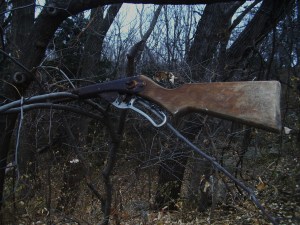
The BB gun –

SANYO DIGITAL CAMERA

He presented it to me as ceremoniously as if he had been a Royal Brigade officer back in Lindia, and he was pinning a medal of valor on my jacket.

I remember vividly to this day standing as if frozen briefly in time, a new recruit in front of Colonel Uncle.  The lofty emotions I felt – They are indelibly imprinted in my thoughts: That day…That day…  

The Red Ryder isn’t shiny and new like Ralphie’s.  The wood stock is worn and faded.  Nicks, gouges, and dents tattoo the tarnished barrel.  But I feel just as lucky as Ralphie.

I run my fingers over the cold steel and splintered wood.  All my childhood senses absorb the ardor of battle my Red Ryder must have encountered over the decades.  I smell the decaying rot of defeated cobras saturating the stock.  I can almost taste the dank of the fur of a charging tiger, “brought down by just a single BB”, I imagine someone bragging over ale at a bistro.

As if it were a seashell, I put my ear to the barrel hole.  Instead of ocean, I hear the calamitous trumpeting of a herd of elephants scared away from an isolate village’s garden, and back into the jungle.  I stroke the splintered teeth marks of a vicious mongoose that tore wildly into the weapon before being subdued.

After a ceremonious pat on the shoulder from crater-faced old Uncle and the even more ceremonious statement, “Now go forth young Gamesman” –

Into the Woods, I foray, to take my place among the tribe of humankind known as, Intrepid Hunter.

Welcome to the Lindian Woods Where I Was Found (Image ©2014 Raji Singh
Welcome to the Lindian Woods Where I Was Found
(Image ©2014 Raji Singh

I dribble a handful of copper BBs into the holding chamber.  I pump the cocking handle.  I take aim skyward, at Poppy Sol.  He glares, reprimanding me with a stinging ray.

So I move my point, toward a gluttonous cloud.  ‘I’ll pop that belly.’

I feel like Papa Hemingway readying to bag his first Rhino.  My hands sweat as I pull the trigger.

The loudest cannon fire BANG!

That is what I expect.

A…phht!  is what I get.

The BB arcs like a rainbow, for not more than 20 feet.  I see where it goes…toward the pond…toward the rubbery lily pad where the Frog Brothers, Frer and Brer, rrriibiit on about the daily news of the Woods.

Plink. 

The BB lands between them, breaking their conversation, and then it bounces off, plunking into the water.  Their sudden stares and immediate deep CRROOAAKS indicate they mock me.

‘There’s that Raji kid again.  The one who almost shot his eye out with the slingshot, last week,’ says Frer.

‘A nuisance he can sometimes be,’ replies Brer, sticking his tongue out at me and simultaneously nabbing a fly.

In unison, they croak loudly, ‘You’ll shoot your eyes out, kid!’

Again and again my shame heightens among the Woods inhabitants as the velocity of the BBs lessen with each shot.

(Seems the relic Red Ryder can’t hold the charge of hand pumped air for more than a few seconds.  But I wouldn’t discover that cold fact until later in life.)

Another shot strays into the water, splashing between a circle of ten napping otters, who hold hands as otters outta whilst sleeping, to keep from floating away from each other.  Seemingly, one at a time their eyes open and they berate me for disturbing their slumber.  ‘You’ll shoot your…’  I get a feeling they’re readying to turn together on their sides, like a wheel, and roll over the water to chase me from their Woods.

I quickly scamper to a meadow where birds are singing joyously.  I shoot the Red Ryder skyward.

POP!

The singing abruptly ends and the birds scatter.  Out of nowhere, the Woods Sky Patroller, Hawk, barrels in from out of nowhere, grabs the BB mid air, flies, just feet over my head, and flings it down hitting me on the head.

“Ouch.”

That is the fastest one of the projectiles flew that day, or would ever again fly from that dilapidated Red Ryder.

‘Never do that again,’ I know is Hawk’s plaintiff cry.  Hawk eyes me viciously and then missiles out of sight.

Sigh!  I guess I may now know just why we Lindians are no hunters.  Likely, we’d starve.

O.K., I will shoot at trees.  Not one barks at me as I take aim.  So I fire.  Relic Red Ryder suddenly takes on a life of its own – but unfortunately, it is in the form of a death gasp.SANYO DIGITAL CAMERA

The BB spits weakly from the barrel, barely going two feet before it drops.

I hear a screech.  In animal parlance, I believe it means – “Hey, whattaya think yer doin!”

I look down, just as the BB bounces off the head of a rabbit, then ricochets as the little fella jerks its head.  The BB flies five feet horizontally, and nearly takes out the eye of a squirrel.

The rabbit’s screech, the squirrel’s angry, loud ‘CHHIIRRP!’ tells me, “Run, Raji!!  Like your life depends on it.”

As angry as the critters sounded, I am sure my life really did.  (Harmless creatures, as Uncles and Aunties claimed; Hhrmph!)

The squirrel and rabbit give chase.  They’re on my heels, snapping, grr-ing, for hundreds of yards, until I am well clear of the Lindian Woods and onto a city street.

I near my Lindian neighborhood, out of breath, and I see my ceremonious old Uncle.  He is sitting cross-legged, on a small rug under a Lindian Fan Tree.  It is as if he has been waiting, patiently, for me. “And how went the hunt, young Raji?”

Wait, is that what some would call a ‘knowing smile’ that slightly crescents his face.

SANYO DIGITAL CAMERA

I return the gun as ceremoniously as it was given to me.  I summon enough breath to say, “Take it Uncle.  Never bring it back.  No matter how careful, it’s only a matter of time, before, I shoot my eye out.”

Thank you, Uncle, for giving back to me, of course not only my eye before I might lose it, but also the simple importance of respecting our feathered flyer, slick swimmer, and furry four-leg friends.

(The Fiction House is your place for short story, lark, whimsy, and merriment.  Meet the many residents as I archive their lives and centuries of adventures.  You can read of their origins in my novel TALES OF THE FICTION HOUSE.  They are completely different stories.  My novel is available at Amazon, (Kindle and Trade Paperback) and Barnes and Noble.)

©2014 Mark Rogers

Posted in archeo-apologist, Children, Children's stories, Fiction House Publishing, humor, satire, Short stories, Uncategorized, whimsy, writing | Tagged , , , , , , , , , , , , , , , , , , , , | Leave a comment

THANKSGIVING AT THE HOME OF BENJAMIN FRANKLIN’S NE’ER DO WELL BROTHER (a delicious holiday repast)

By Raji Singh

Our Founder, James Thaddeus “Blackjack” Fiction ‘Tell our stories, Raji. If you don’t, it will be as if we’ll never have lived.’ These whispering cries of joy and sorrow rise from the bookshelves and portraits in the Fiction House. I cannot refuse. (Artwork enhancements by: Joseph Rintoul)

Our Founder, James Thaddeus “Blackjack” Fiction
‘Tell our stories, Raji. If you don’t, it will be as if we never lived.’
These whispering cries of joy and sorrow rise from the bookshelves and portraits in the Fiction House.
I cannot refuse.
(Artwork enhancements by: Joseph Rintoul)

Happy Thanksgiving!

Who knew we’d celebrate together by eating a bird once proposed as the symbol of America? A myth? But a delightful one! However, it is no myth that even joyful gatherings can have their edges. Let’s see how old Benjamin handled his?

   *     *     *

 For those of you who might suffer trepidation because of familial strife, we hope you remember the bonds that you all share.  And if that isn’t a comfort…remember you are not alone in your struggles.  Join us as Fiction House looks back, way back, to what our admired early American leader endured on a very early Thanksgiving…

*     *     *

The Ancient Mariner, the scruffy sea salt who raised my great-great grandfather, told this curious holiday story.  It’s been handed down for almost 250 years.  Enjoy!

*     *     *

“To the GOOD life!”  Benjamin Franklin toasts.  A dozen of Franklin’s relatives, and a spiffed up Mariner, all “clunk” tankards.  They gather in the Philadelphia home of Franklin’s half-brother Franklin Ulster.  The men, all finely dressed in vests and jackets:  The women, in best subtle gray long dresses.    

     Ulster’s already woozy having sneaked many-a-nip to help cope with Benjamin’s incessant boasts.

They give thanks, sit, pass the food, and eat steamy sweet potato, tart cranberry compote – all the usual, with all the sweet scents of banquet, but turkey.  No one would dare offer up Ben Franklin’s noble favorite creature, which he backs as the new nation’s symbol.

BETTER than any ale you’ve had, eh Ulster.”

The host limply nods.  On that, he must agree.

Franklin proudly thumps his chest and sniffs.  “A woodsy scent this batch has.  I must say, this is the BEST stump juice yet that Mariner and I have had the privilege of brewing.  Fitting nectar for the heroes of the Colonies who lie at rest in their Elysian Fields.  A place you shall need not worry of ever residing, being battle shy midst our Revolution.”

Ulster starts to defend his weapons merchant status, but his wife kicks his ankle under the table.  Brother-in-law Benjamin just might be convinced to float a loan to keep the creditors from the door.  The home, though not a hovel, is faked; garish below the surface.  Plaster of paris Louis XIV statues stand in for the real marble.  Sturdy walnut furniture is replaced with rickety pine lookalikes.

“Concerning our stump juice, as with all things in life, as I always say, Ben Franklin says, ‘Good, Better, Best.  Never let it rest.  Until the good is better and the better best.’  That’s what I always say,” Benjamin Franklin says.

“Oh you do,” Franklin Ulster challenges.  Ulster had pre-dinner fumed for an hour as the honored guest told of his Paris diplomatic exploits that help borne a new nation.  Now he’s caught brother braggart in a lie.  He maliciously spits out, “We both know those words you quote were written on the sign at Goode and Betty Bests Bakery when we we urchins.”

Benjamin squints down on Ulster through his bifocals, and calmly honeys a bun.

“And just who do you think sold them that adage.  Moi!  Mr. Ulster.  And for a pretty penny.  That coin built up through the decades made me the wealthy man I am today, Sir.  As I always say, ‘A penny saved is a penny earned.’”

Franklin Ulster grits his teeth, but Benjamin Franklin is just beginning his pillorying.

“I am truly sorry your Shoppes and various ventures failed.  If only you’d listened to my sage brotherly advice instead of wagering at cockfights.  You could very well be in the financial position I reside.  So, there!  F.U.”

Some of the younger ladies at the table attempt to hide their eyes with their handkerchiefs.  Some matrons titter at the bawdy inference.  Elder statesman, Uncle Benjamin smiles pleasantly at each of them.

Ulster abruptly rises and his brass cock belt buckle upends his plate, sending his Thanksgiving fare down the front of his pants.  “Damn you, Ben.  My name is Franklin Ulster.  I demand the courtesy of being addressed as such in my own home.  Not being treated as some bastard kin.”

“My full apologies Franklin Ulster.  In amends, let me personally serve you the escargot I’ve made for our repast.”  Benjamin Franklin nods to Mariner and Mariner kindly returns the courtesy.  “The Mariner taught me his special recipe when we first met in Paris.  It was the talk of all the French society.  The grand chefs of the city paid my friend quite handsomely for his recipe.”  Franklin goes to a rickety sideboard, and gets a clean dinner plate.

Franklin Ulster impetuously grabs it.  “Snails we eat to appease the grand Doctor Franklin.”

Benjamin Franklin responds, “You’d not offer eagle to those who want it for our national symbol.”

Ulster spits out the crawly foreign fare after the first bite and throws the full plate against the wall.  It smashes into a dozen shards.  “I’m off to slaughter a turkey.”

Before he gets to the door, the normally talkative Mariner, who has been quite quiet throughout the afternoon, shouts, “I’ve ‘ad enough of yer performin’, mate.  Show yer respectins’ for the honored Doc Franklin, F.U.”  The wiry, but sturdy seaman quickly intercepts Ulster, and in seconds, from the long sea line he always has in his pocket, keel hauls him, and hangs him from a ceiling post beam.  There he dangles until a leisurely meal is complete.

~ ~ editor note:  (Keel haul – to tie line to each arm and hang from the bow of the ship.)

The accounts that various Franklins relate in memoirs and letters in the archives of Fiction House Publishing tend to back the overall story. The reader must take into consideration, the Mariner, known for his proclivity for tale telling, and this is his telling, after all – he may have embellished his part in the holiday affair.

You may read A Thousand And One more of Mariner’s tellings in Tales of the Fiction House.  ~ ~

Happy Thanksgiving!

Sincerely,

Raji

© Raji Singh 2012

(Join me at the Fiction House, your place for short story, lark, whimsy, and merriment.  Meet the many residents as I archive their lives and centuries of adventures.  You can read of their origins in my novel TALES OF THE FICTION HOUSE.  They are completely different stories.  My novel is available at Amazon, (Kindle and Trade Paperback) and Barnes and Noble.)

©2015 Raji Singh

©2018 Mark Rogers

Posted in Fiction House Publishing, humor, Short stories, Uncategorized, whimsy, writing | Tagged , , , , , , , , , , , , , | Leave a comment

A HALLOWEEN SPOOKER: THE DISPUTIN’ RASPUTINS OF THE HIGH SEAS (AND THEIR WALK-OFFS)

By Raji Singh

Our Founder, James Thaddeus “Blackjack” Fiction ‘Tell our stories, Raji. If you don’t, it will be as if we’ll never have lived.’ These whispering cries of joy and sorrow rise from the bookshelves and portraits in the Fiction House. I cannot refuse. (Artwork enhancements by: Joseph Rintoul)

Our Founder, James Thaddeus “Blackjack” Fiction
‘Tell our stories, Raji. If you don’t, it will be as if we never lived.’
These whispering cries of joy and sorrow rise from the bookshelves and portraits in the Fiction House.
I cannot refuse.
(Artwork enhancements by: Joseph Rintoul)

Creepy stories abound this time of year! But have you ever been frightened of …toes? We hope you enjoy this tale unearthed from the tombs of the Fiction House, a Halloween re-treat.

*     *     *

The High Seas players:

The Pirates- a scurvy lot

Their Capt’n- a lice-ridden fiend

Captain Polly – Capt’n’s enslaved parrot

Turt- a good-natured land sea creature – almost a garnishment for the pirates’ meal

The Captives:  Buzzard, Mariner, R-r-rose Heather, Kunta- enslaved by the pirates.

The Walk-offs- The lopped off part of the foot, from the tip of the toe to ‘on back just a tad’.

(Buzzard is telling tall tales.  They mask the captives’ clandestine mutiny)

*               *               *

     Buzzard strokes the mast then pulls away with a dramatic flourish.  “Slick-as-a-badger, gents, Kunta slid down the mast, unseen by all but me.  Before I could get here to stop him, he tangled his feet ‘round the throat of your unsuspecting mate.  Wrung his neck.”

Buzzard invents as he tells.  By playing-into audience’s endless superstitions brought on by the fog and grog-life of the sea, he manipulates them into believers.

“Kunta’s the cunning deceiver that sliced out the Moroccan’s tongue.  Fed it to his ravenous Turt, who ingests our languages – to use against humans in the future,’ I’ll wager. [1]  That beak-snouted demon is heartless.  So Kunta cuts out the heart of the Algerian for him to devour while it beat.”

([1] Morrocan’s now a mute, driven mad by the cutting – so he can’t relay what really happened; that Mariner’s the slicer-dicer.)

‘A vile, contemptuous evil pervades the ship,’ thinks Captain Polly.  From her perch, she watches the sallow-faced crew.  Their attention never leaves Buzzard who is wending about the deck.  Parrot knows she must do something to save herself from the stealthy young badger-human Kunta and his shelled beast that her Buzzard warns of:  But, what?  With leg chained.  ‘Only hope,’ she thinks, is this dream-lover bird, Buzzard – but, ‘oh how to woo a human?’

“Kunta stalks,” Buzzard rails.  “LOPPING more walk-offs for his necklace; PLOPPING his victims overboard.  Some of the walk-offs are quick, devious.  They escape.  BEWARE!  These walk-offs gone-feral hate humans.  They lie in wait to destroy us.”

“What the Buzzard says gotta be true,” a pirate belly-aches to the others.  It’s after lunch.  They sit on crates near the railing – so they can vomit.  The Rasputin-of-the-word – Buzzard, his sly comrade Rasputin-of-the-poison, Mariner, has upped the dosage – just a smidgeon – so that the savvy-to-the-tricks-of-the-sea, dregs, don’t notice.  They think only, ‘the waves are having their way with gullets.’  They tremble continuously, and sweat so much that their raggedy limp clothes seem starched from saturating then drying so often.

(The poisons keep Capt’n stupor-fied.  The pentad of mutineers know he may prove an asset if alive.  One of them always guards him in his quarters turned prison.)

Crew’s superstitions beckon irrationality.  In their poison-induced hallucinations walk-offs come to life; stalk.  They begin believing they sail on what is becoming a ghost ship that may be overtaken anytime by the walk-offs.  As Buzzard spins his tale, the dregs mutter vows in a dozen languages, about skirting the mast after dark and keeping near the rail to avoid Kunta.

“That’ll never do,” Buzzard counters.  “Kunta and his shelled vampire straddle the ship’s sides, leaping on the unsuspecting.”  Dregs look warily over the rail, wishing for land.  It’s a thousand miles off.

The usually mawkish-squawkish Captain Polly is quiet.  ‘The monster walk-offs will see I am no dreg.  I will reason with them.  Teach them the humans’ many languages.  (Captain Polly knows at least a dozen.)  Oh so valuable I can be.’  None of Captain Polly’s self-assurances quells her horror of, while still alive, being plucked, de-beaked and de-clawed by Kunta and Turt.

When not stalking the deck with his flapping, Buzzard’s usually arguing in the galley with Mariner about the tactics of their tightly schemed mutiny.  But they agree, fully, with the results.

“How’d it get to this?” the crew whispers to each other.  “Turt’s curse, for ravaging his island for the shell and meat of his relatives?”  Others think hexing, by a tribal witch in retaliation for stealing Kunta.

Ominous signs of the walk-offs – stinking dried blood trails staining the deck – swell superstitions.  A once-tranquil voyage of plunder and pleasure is now, nightmare.  “Why’s our Capt’n keepin’ to quarters?  Even at his sickliest, he’s stayed the deck wielding his whip.  Why’s he issuein’ orders through Buzzard?”

Buzzard, in this short time, seems to have been elevated to acting Captain.  Many pirates are loyal to him – ‘only way to survive’ – as they struggle to man-the-ship to get close to land.

THE TALE OF MAMA L’S SECRET SLICKENS

Mariner, allowed enough chain to come up for daylight, listens to Buzzard’s tales from the galley doorway.  Captain Polly watches Mariner wipe fish blood from cleaver onto his neck-to-knee apron.  In futility, she gnaws her chain, wary of the time he might want her for a ‘fixin’.  From the first meal, he cooked – it smelled sweet as any Amazonian jungle cuisine –

– pirates shoveled it in.  When they spooned some into Captain Polly’s bucket, she sniffed, recognizing ingredients humans cannot.  (plants from Leezian’ bayou; recipes, come courtesy of Mama Lucy.)  Flying over the ‘Big Easy’ Captain Polly had seen their effect on critters.  They went battier than during a Gone Luna.  So now, Captain Polly is subsisting on the array of bugs flying close to her perch.  ‘Oh,’ growls Captain Polly’s stomach, ‘but to fly free of this ship.’

Mariner found the slickens – kegs of North Africa’s plants, almost cousins to poisonous Leezian’ claw-root and twig-lick – during his first day in the galley.  “One dasha’ claw banish evil spirits.”  Creviced old Mama Lucy had ‘scienced-up’ Mariner in her cabin’s kitchen-lab.  “Cure most ills.  Two dasha’ twig cures yer patient of inflictin’ devils.  Three-’a-each, ‘n the devil escape; slitheren’ inta another ta inhabitate.”

Mariner always uses two-and-a-half, insuring deferred insanity.  He can’t give three to finish the job – crew’s needed to get ship to shore.  If it appears madness may arrive before land, he lessens the dose.  For Buzzard, Rrrose Heather, her ladies and himself he prepares simpler fare.  For Capt’n, who killed most of Mariner’s dear friends from the commandeered ship, Mariner prepares meals with another cousin-berry – the dung-flower.

“Gaarente-ad’,” Mama’ll testify.  “Tuz cause most-vile hallucinatin’, yea inde-ad’.”

Mariner looks from Buzzard, who is finishing a tale, and glances at Captain Polly.  She imagines he’s saying, “Ready to join yer Capt’n, Captain?”  She gnaws shackle even more desperately.

TALE OF A SAIL

“Hoist starboard keel.  Set jig-rigging north, northwest.”  Buzzard mangles the orders of the ‘silent-Captain’, Mariner, rendering them illogical.  Doesn’t matter; bedraggled crew sails by rote.  No doubt, Rasputin-Buzzard steers the emotions of fear; Rasputin-Mariner helms the mayhem triggering it.

TALE OF HOW THE WALK-OFFS ‘REALLY’ CAME ABOARD

Late at night:  Cleaver descends.  “WHAP!”  A piercing scream, ‘THUMPS’, of running.  Scream stops with watery “PLOP”!  Someone yells:  “MAN OVERBOARD.”  In the shadows, Mariner wipes cleaver clean and oysters-out slimy walk-off from the tip of leather shoe.

All the crew now wears shoes.  ‘Does ‘em little good,’ Mariner grins.

From her manacled spot near the helm, Captain Polly quivers midst a new revelation:  ‘New Cookie’s got a key.  He can come for me anytime.’

Mariner eases back to the galley and re-shackles himself.  He stows walk-offs in the Capt’n’ humidor.  In a few days, as just another small way to nudge Capt’n closer to insanity, he’ll have Rrrose deliver it to Capt’n’ new quarters – a six by six dungeon-like room, rancid from 50 years of storing smoked mackerel.

Capt’n sleeps constantly, awakens only to his own screams caused by hallucinogenic dreams of sea creatures devouring him alive – more of the effects from Mariner and Mama’s ‘slickens’.

THE TALE OF A ‘GOOD’ LIFE FOR SOME

Buzzard, Rrrose Heather, and the ladies they now occupy Capt’n’ plush quarters.

“You’ll live with the bloody walk-offs throughout hell’s eternity,” Rrrose Heather, veiled as fortune tellers Capt’n always visited when in ports, soothsays to him – her personal revenge for what he’s done to she and her ladies.  She leaves the humidor with him in his dungeon.

THE TALE OF A ‘WORSE’ LIFE FOR OTHERS

Midst hot-cold sweats, Capt’n removes lid and reaches for a cigar.  The slimy walk-offs feel like jellyfish, their stench, worse than the rancid mackerel.  He pushes humidor.  Contents spill.  His eyes widen as hallucinations spiral into a parade of the moldy gray-green walk-offs tip-toeing to come choke him.  Too paralyzed to move, he screams, continuously, curdling-ly.  

     Reverberations echo through ship and shake the mast.  Crew looks up at the sails, expecting to see Kunta and his monster, their arms, fin-claws stretched in victory sign to show that they now control the ship.

Buzzard swoops from the ship’s wheel.  What to expect?  He is sure he’ll find Capt’n, dead.

Captain Polly hops on the wheel to steady the ship as Capt’n has trained her for times when an automatic parrot is necessary.  Though she loathes Capt’n, she feels pangs of sorrow.  That lasts just seconds.  She sings in an ecstatic combination of a half-dozen languages.  “Blow the man down, mate.  Blow the man down.  You gave us time, we blew the man down.”

The crew doesn’t share her joy.  If Capt’n is dead, hope for survival is with Buzzard.

‘Who will be at his mercy?’  Many silently vow ‘to become his slave if he protects them from Kunta and Turt.’  Captain Polly’s had enough of being a chained slave.  She has another idea.

Buzzard returns to the wheel, relieved that Rrrose’s act of revenge hasn’t killed Capt’n.  Captain Polly hops to his shoulder, brushes plumage sensually against his neck, gently nibbles ear, coos, “Lover bird.  Loverbird.  I’ll be true to you.”

© 2012 by Raji Singh

(Join me at the Fiction House, your place for short story, lark, whimsy, and merriment.  Meet the many residents as I archive their lives and centuries of adventures.  You can read of their origins in my novel TALES OF THE FICTION HOUSE.  They are completely different stories.  My novel is available at Amazon, (Kindle and Trade Paperback) and Barnes and Noble.)

©2014 Raji Singh

Posted in archeo-apologist, Fiction House Publishing, humor, Short stories, Uncategorized, whimsy, writing | Tagged , , , , , , , , , , , , , | Leave a comment

GOBLINS IN YOUR DESK DRAWER

(Previously posted on Pen in Hand)

By Raji Singh

Calico in a frantic flight from the goblins (©2013  Image by Joseph Rintoul)

Calico in a frantic flight from the goblins (©2013 Image by Joseph Rintoul)

October Horrors Await!  Some fear ghosts, skeletons, even neighborhood elves with hungry eyes and empty trick-or-treat bags.  But writers…that is altogether different.  Here’s an old favorite from dusty Fiction House files.  Happy Hallooooooooween!

*     *     *

Writers beware.  Word and sentence gobbling goblins may live in your desk drawer.

Writers, be prepared:  You with manuscripts years, or maybe decades old are most at risk!  They don’t seem to attack recent works.  You may find your old masterpieces decimated, as much so as if you wrote them on oak blocks and ravenous termites discovered them.

The goblins perform quite thorough jobs of editing.  Your book, short story, screenplay may be as unrecognizable, as if studio hacks were charged with re-writes via committee.

I discovered this fact, when deciding to dust off and review my ‘TRUE MASTERPIECE’ of a few years back.  Multiple agents and editors didn’t recognize the genius story line, character developments, plot twists, and overall grandeur of the work at the time I queried them.  So I’d put it aside.

‘Strange,’ I thought removing my paper copy from its dusty wrapping to re-familiarize myself.  ‘What’s this?  This word wasn’t misspelled way back when.  Hey, this sentence doesn’t make any sense.’

What’s up?  I knew exactly what I meant to say, and I said it, when I wrote this.

Something’s wrong!  Page after page I, first peruse, and then intently study.  Words are missing, participles dangling, adjectives inconsistently jangling, images incoherently tangling.

What’s this?  Even my main character changing his name, eye color, even sex, and then chameleon-like becoming who he was in time for the BIG denouement.

There is only one explanation:  Those hobbling, gobbling goblins of time.  My masterpiece – reduced to gnarled waste paper:  All because those tiny-vision agents and editors couldn’t see the grand scale of my work.  If not for them, my work would be on bookshelves throughout the literate world, there for Humankind to learn from, and, help bring peace and harmony to all.   Published and safely ensconced and shining on bookshelves, my masterwork would have been safe from the dusty desk drawer goblins of time. 

     C’ est la vie.

I’ll go through the book again.  And again.  The world is waiting.

Maybe, a good lesson to other writers?  Put your writing aside for a few weeks, not more than a few months, if even that, but most certainly, not a few years.  A SHORT interval of time will give you a fresh, clear perspective on it.

Never, ever put it aside for years, or you too may start believing in goblins.

I bid adieu wishing you happy writing, and as importantly, happy meticulous rewriting.      

(Enjoy Raji Singh’s whimsical slice of life tales and vignettes  at Tales of the Fiction House.com  You can buy his novel, Tales of the Fiction House- a completely different story- at Amazon)

©Raji Singh 2013, 2022

Posted in archeo-apologist, Fiction House Publishing, humor, Uncategorized, whimsy, writing | Tagged , , , , , , , | Leave a comment

LABOR’S DAY SMILE

by Raji Singh (editor, Fiction House Publishing)

Our Founder, James Thaddeus “Blackjack” Fiction ‘Tell our stories, Raji. If you don’t, it will be as if we never lived.’ These whispering cries of joy and sorrow rise from the bookshelves and portraits in the Fiction House. I cannot refuse. (Artwork enhancements by: Joseph Rintoul)

Our Founder, James Thaddeus “Blackjack” Fiction
‘Tell our stories, Raji. If you don’t, it will be as if we never lived.’
These whispering cries of joy and sorrow rise from the bookshelves and portraits in the Fiction House.
I cannot refuse.
(Artwork enhancements by: Joseph Rintoul)

Happy Labor Day! Take your day of well-earned rest.  In honor of the laborers, we offer our thanks and a favorite post from the Fiction House Archives.

*      *     *

“…he died at age 52,” reports the network anchor, breaking the news of the death of….“A successful business person, he was known to proudly brag of working 16 hours a day, usually 6 to 7 days a week.  Doctors report he died of sudden…

“Associates say, ‘He worked himself to death’.  It’s reported his personal net worth exceeds one billion dollars.”

“Jack died doing what he loved most,” says his widow as her face comes on the screen briefly.  “Making money.”

***

“I believe she was smiling just a little, when she said that, don’t you, Raji?” Tenille says playfully, as she comes from the kitchen and turns off the TV.  “’He worked himself to death.’  They never say, ‘He took-it-easy’d himself to death,’ hmm Raji.”

I smile.  “I knew him.”

“Oh, I’m sorry.”

“Not well.  But enough to know he never took a break from the money chase.  He was always pestering me, trying to buy one of my businesses.  Just so he could turn around and sell it.  I overheard a conversation at a restaurant between him and his wife.  She kept telling him, ‘Slow down, Jack.’  He was on the phone through their entire meal.  He obviously didn’t hear her.”

Tenille sits beside me on the couch, brushes her fingers across my cheek, and kisses my mouth.  “I’m glad you’re not like that anymore, Raji.”

“Well, I was never quite like Jack. Still, you and the children changed me.”

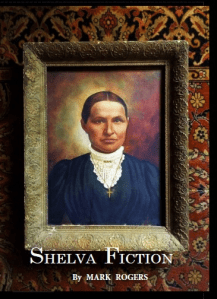
My Sweet Ancestor, Shelva Fiction

Tenille’s  josh, “They never say, ‘He took-it-easy’d himself to death,” is something I agree with wholeheartedly.  It’s a sentiment I’m certain most, maybe all my ancestors here at the Fiction House practiced.

“Fortunately, it does not appear, mine sweet druzhyna husbant Raji, you will be featured in a news story like that anytime soon, eh?”  Tenille is mimicking, kindly, my Russian immigrant great grandmother, Shelva Fiction.  Tenille knew her very well.  (I wish I had known G – Gra’ma Shelva.  I didn’t, growing up so far away from her.)

 My Pet Calico (©2013 Image by Joseph Rintoul)

Shelva’s Lighthearted Friend, Calico
(©2013 Image by Joseph Rintoul)

Shelva was always involved, fully, with life every moment of her over 100 years.  Her thousands of stories, many of which we’ve been publishing at Fiction House, certainly prove it.

Tenille imitates in a loving way the odd little Muscovite sayings Shelva incorporated into her ‘Amerika talk’.

“I learn English; Russian steppes by steppes.  The consonants of North and South Amerika, they are an ocean away from the consonants of Asia and Europe.  That distance – it is good.  Because, then there is no worry about the Czar’s Cossack butchers disemvoweling you.”

This is what Shelva’s ‘husbant’, her sweet druzhyna, said when George Bernard Shaw published Pygmalion.  “My Fair Lady, Shelva.  It wasn’t long before she was speaking English as well as Professor Higgins, and writing like Shaw in never-ending journals.”

Shelva and Jack:  I wonder if they had anything at all in common.  Jack made money, and at age 52 that money made his widow smile, slightly.  Shelva at over double that age was still traveling, still helping raise children, still helping fellow Muscovites to freedom, still writing of past, present and yet to come experiences that thousands would come to read.  So many ‘stills’ for Shelva.  She was always smiling.

I don’t think, of all the times I saw Jack, I ever saw him smile.

©2013 Raji Singh

(Join me at the Fiction House, your place for short story, lark, whimsy, and merriment.  Read more about Shelva and meet the many residents as I archive their lives and centuries of adventures.  You can read their origins in my novel TALES OF THE FICTION HOUSE, but that’s a different story.  It’s available at Amazon, and Barnes and Noble.)

Posted in archeo-apologist, Fiction House Publishing, humor, satire, Short stories, whimsy, writing | Tagged , , , , , , , , , , , , , , , | Leave a comment

A BACK TO SCHOOL TALE: THE LEGEND OF THE SCARLET TOUNGED, BLUE MOUTH DEMONS

Our Founder, James Thaddeus “Blackjack” Fiction
‘Tell our stories, Raji. If you don’t, it will be as if we never lived.’
These whispering cries of joy and sorrow rise from the bookshelves and portraits in the Fiction House.
I cannot refuse.
(Artwork enhancements by: Joseph Rintoul)

To our adult and teacher friends, we hope that this coming school year is a bright one for you and for our children.   As you face those young ones, many have fears they are afraid to express.  As you comfort them and transform them into excited learners, we thank you. To gift you with a smile, please accept this whimsical excerpt from The Seasons of My Giving Back.

*     *     *

School’s JUST starting for some and forever out for many. Here’s a school daze reminiscing that nearly scared the “be-jeezers” out of me, and made me truly experience how much more satisfying the giving back is than the taking.

*   *   *

From the sidewalk, you believe you hear terror in the voices of the Aru brothers.  When you peek through their bookshop door, propped to allow in the morning breeze, you think you see fright on their faces.

Moher often tells you, “Never eavesdrop, Raji.  It is impolite.”

You wish you had heeded her admonition.  Nightmares, sweat drenching sleepless nights, and a discombobulated first month of school result from what you overhear.  The street traffic is noisy.  So you make out just pieces of the conversation.

“…They may well overrun all Cincinnati, those, those…”

Ari Aru finishes his brother, Sari’s sentence.  “…Those scarlet tongued, blue mouths…”

Though it is still warm September, Ari and Sari’s next words freeze you, as if you’re a January snowman.

“…4th grade boys…”

“…turning them into…”

“…so hideous, so scary…”

You clench your school lunch sack and remind yourself, ‘You are a 4th grader, Raji.’

“Hi Raji,” Ari shouts, thawing me.

“Hello, Mr. Aru.”cover the seasons of my giving back

“Come in Raji.  The book your father ordered arrived.  We’ll wrap it up for you to give him.”

Even though you’ve known these bearded and ancient Lindian neighborhood Uncles as long as you can remember, suddenly it seems you don’t know them.  You hesitate entering their shop.  The always-there baggy, blue-black puffs beneath their eyes, seeming gentle smiles, suddenly appear sinister.

“Do not just stand there, Raji.”  Ari takes you by one shoulder.

Sari seizes the other.

These friendly bookish confines you’ve been in hundreds of times, becomes a trapping lair.

The brothers lead you to the counter.  The business has an out of place scent, burning saffron.  Strange chants, in a Lindian dialect you do not understand, emanate from tinny speakers in a back room.

Ari and Sari dress in white cotton dhoti shirts and multi-color silk pants.  They keep, oddly, to the old world Lindian ways.  They chew teeth reddening betel nut, yet worship Goddess Nardesha who forbade the addictive habit.  They speak perfect English, yet stock only Lindian language books and newspapers.  These things, that for you had been ‘just the way the brothers are’, now are ominous.

You begin believing – If you were a stranger passing through our neighborhood…those red teeth, and blue-black under-eyes…you’d keep right on going, lickety-split.

“What grade are you in this year, Raj?”

You stammer.  “Four…fourth.”

“Hmm!”  Ari looks to Sari and back to me.  “Well you be very careful, Raji.  Because boys your age…”

You don’t hear the rest of what he says, because you grab the package, and run out.  You’re just sure you hear Ari say to Sari, “I just hope our Raji doesn’t become one of those scarlet tongued, blue mouths.”

Don’t know what one is:  A zombie, giant lizard, horrific monster.  Don’t want to find out.

*   *   *

Throughout September, you avoid walking by the bookshop.  With time and distance, you start realizing your distrust of the Aru brothers is unwarranted.  What you should fear is the scarlet tongued, blue mouths of whom they speak.

You look twice into alleys you must cross.  You never know if a scarlet tongued, blue mouth may lie in wait, or what they may do to you.  You shutter your mind to the possibilities.

~ ~ You may very well enquire, Dear Reader.  “Why aren’t you asking an adult about the scarlet tongued, blue mouths?” ~ ~

It is because of another conversation you overhear.  Sari Aru is on a street corner talking to a parent of a classmate.  “So it got your son.  I am sorry to hear that.  But he will survive.  Embarrassment will be his only illness.  That is fortunate.”

Then Sari says.  “If only they’d stop talking about it, then they would all be safe from the scarlet tongued, blue mouths.”

That convinces you.  Your lips are sealed.

The next day you look close at the talked about boy.  There it is, hardly noticeable, a slight tinge of blue to his lips.  When he speaks, you see a slightly scarlet tongue.

You look at the mouths of other classmates.  You lean too close to a girl’s face.

“What are you doing, Creep?” Margaret cries and backs away.  “Are you spying on me?  Mom wants you to report if I wear makeup.  Doesn’t she?”  She quickly wipes off bluish lipstick. “I hate you Raji Singh!”

Margaret runs from the room.  You sink low in your seat as everyone looks at you – glaring, smiling, as if you two were a 4th grade ‘item’ and it was revealed at that moment.

Maybe confronting a scarlet tongued, blue mouth would have been easier than dealing with Marr-grr-ett.

*   *   *

That afternoon on the playground, ‘The Mystery’ solves itself.

Boys line up to climb the ladder to the slides.  Mop-haired Joshua, a sly trickster, secretively shares one of his gimmicks.  He takes a plastic pen from his pocket.  He says, “The Aru brothers carry these at their store.  If the pens go bad, they may look at you funny, but they’ll give you a new one.  When you’re almost out of ink, just suck on the air hole, like this.”

The boys watch curiously.  The ink rises slowly.  Something strange happens.  Maybe it is high readings in barometric pressure that day.  Maybe Joshua is showing off and applies too much suck effort?  The blue ink suddenly spurts from its tube – like red mercury from a thermometer in a Saturday morning cartoon.

Joshua spits, phhts, and phews as the ink coats his lips and seeps onto his tongue.  His mouth turns blue, and his tongue scarlet.  He runs wildly around the playground, spitting, phht-ing and phew-ing as he wipes crazily at his face.

*   *   *

The question you will always have for Ari and Sari, but will always be afraid to ask, “Did you know I was listening to you that September morning when I was in 4th grade?  And, was it for my own good?”

“It was a giving back to me, simple lesson in honesty, wasn’t it? Thank you Ari, Sari.”

©2015 Raji Singh

(Join me at the Fiction House, your place for short story, lark, whimsy, and merriment.  Read more about Shelva and meet the many residents as I archive their lives and centuries of adventures.  You can read their origins in my novel TALES OF THE FICTION HOUSE, but that’s a different story.  It’s available at Amazon, and Barnes and Noble.)

Posted in archeo-apologist, Children, Children's stories, Fiction House Publishing, humor, satire, Short stories, Uncategorized, whimsy, writing | Tagged , , , , , , , , , , , , | Leave a comment

THE GLUMS, PART II

By Raji Singh

Our Founder, James Thaddeus “Blackjack” Fiction ‘Tell our stories, Raji. If you don’t, it will be as if we never lived.’ These whispering cries of joy and sorrow rise from the bookshelves and portraits in the Fiction House. I cannot refuse. (Artwork enhancements by: Joseph Rintoul)

Our Founder, James Thaddeus “Blackjack” Fiction
‘Tell our stories, Raji. If you don’t, it will be as if we never lived.’
These whispering cries of joy and sorrow rise from the bookshelves and portraits in the Fiction House.
I cannot refuse.
(Artwork enhancements by: Joseph Rintoul)

Already missing the 4th of July celebrations?  Here is a flash from the past to lift your spirits!

Here’s an 1820’s tale about my great-great-grandfather, the Carper. (An excerpt from Tales of the Fiction House)

*    *    *

Mariner spins and spins for Carper. Next tale, “Pharaoh’s daughter, the beautiful Princess, she discovers baby Moses agrowin’ ‘mongst the Nile’s bulrushes and reeds. He’s a mighty foundlin’. Sproutin up, leadin ‘is people through torturous deserts to freedom. Still leadin em yet today.”

Carper’s eyes spark. “Still?”

Mariner nods. “So jus’ maybe you’ll grow up to do some leadin’ of yer own.” He strokes Carper’s face. His crinkly lines of melancholy begin disappearing. “N’ then Carper, there’s Romulus and Remus. Foundlin’ twins suckled to survive by mama she-wolf in a grassy valley of seven hills. Them boys went on to found the great city, ROME, twixt those hills. I ported there dozens a times. Bee-youtiful’ Carper. You’ll go there one day.”

Carper’s eyes spark.

Mariner picks a couple of ratty-tatty books from the shelf and opens them to pictures of ‘M’ in the bulrushes and ‘R’ and ‘R’ at the teats.

Carper’s imagination is entree into the pages. Escape to imagination begins washing away the GLUMS. The tunnel begins shrinking, then, zap, like that, disappears.

Carper wades out to meet Moses. Princess lifts the future prophet, but wait – a cratered old gator is sliding their way. His vibrating growls quake the pages. The Princess’ delicate gold bracelets and necklace chime as they brush her silken gown. Growl isn’t from the gator. His snout is closed. Carper glances out from the pages, to the wanted poster. Laza Bones Thibidioux turns Adonis-side profile and shows his mangled gator side. He’s the growler. He peers at the helpless trio retreating to shore.

He snorts, ‘Git em ol Uncle. Feast on der bones den toss one out ta yer kin.’

Uncle ratchets mouth, snaps inches from Princess’ waist. Her golden belt rips away and tangles in his pointy teeth. Looking victim to an overzealous ancient dentist Unc leaps above water. ‘CHOMP!; Just misses swaddled Moses.

Carper uproots a rigid reed, taller than he is. He parries, thrusts, as he did battling Turt. He realizes what he must do to save Moses, but not the same thing that saved him from Turt. With free hand, he plucks another reed. He slaps Uncle Gator’s snout with one while jabbing with the other. Unc winces, but he’s a comer.

‘Git that Carper, Uncle,’ Laza Bones shouts.

Carper lets him get just so close, then rams reed between Uncle’s upper and lower jaw. It sticks, holding open snout. Squealing, frightful noises no Princess should ever hear! She covers ears. Carper, to the rescue. To give her majesty time to get away he begins spinning the uncle like a bottle, pushing him to shore. He upends him with the reed as he did Turt with Harpoon. He stands triumphant atop flopping reptile. Poised rigidly with reed he looks a miniature of Mariner’s ‘Poseidon with trident’ picture.

‘Curse you Carper,’ shouts Laza Bones Thibidioux.

Suddenly Carper finds himself watching from a few pages on as loving wolf mother nurses Romulus and Remus. A galloping gator descends a hill and heads toward the unsuspecting trio. ‘Git em Auntie,’ shouts Thibidioux. ‘Keill the beetch and adopt the boys fer yeren’ own. Haul em back to the bayou where dey can be learned the swamp things that’ll let em rule the world.’

No reed. No harpoon. Carper knows he must make do. He looks about barren valley. He spies a ropey snake and grabs it. Auntie lunges. He snaps snake like a whip, coiling it around her snout. (Just like Kunta did to save the Reverend at the river, James lauds. Maybe Carper and Kunta met somewhere along the way?) Carper loads Romulus and Remus onto mother’s back. She smiles thanks, R & R gurgle, and off to safety they ride.

‘GRR,’ Thibidioux growls. His teeth chatter as terbaccy stick he chews sticks in his craw. He chokes it out. “Ye’s not seen de las a me’s, mon fishboy.’

Carper exits the book.

The GLUMS! Gone. But remnants remain. Carper shakes; cries out. “I’m not Moses. Not the twins. You tell me I’m Carper. But I know I’m not. Who’m I Mariner?”

Turt cranes neck so his calming, hypnotic eyes are parallel to Carper’s. ‘Relax Carper. Breathe slow, deep. Count the twinkling starfish as they swirl.’

Ol Tom purrs, gently slipping his head to Carper’s cheek.

Mariner squints. “You have to be someone son. Least for a while. Up to me to help that along, til you can decide who you be. I didn’t just pluck your name from the sea. I named you after one of the noblest foundlings of all time, the renowned Carpier of Lindia, a great poet and storyteller who inspired his people. He led them to freedom of not only body, but of spirit.”

“Carpier?”

‘Carpier?’ James, too questions, right along with his great-great grandfa. I know that name.’ James stands invisibly next to Carper. Their shoulders rub, but neither feels other.

“Patience. I’ll be spoutin ‘a the Carpier right soon.” Mariner rights up the slouching boy.

Suddenly Mariner begins peering over to the space – where James ain’t. He whooshes his hand, right through James.

For a moment, James thinks he can read Mariner’s thoughts, ‘You be there, but a haint you ain’t. I’ll untangle that mystery knot.’

Then Mariner continues talk with Carper. “In Carpier you have a great legacy to live up to. But I saw right away when I fished you from under that cart that you got it in you.”

Mariner runs fingers over Turt’s shell as a sea captain would a globe. He stops at a thin, turbaned man. “I tried my hand at carvin’ one time. Carved Carpier, sittin lotus-leg next to Kunta’s village. He’s tellen ‘em tales to make their days go easier since they lost their beloved Kunta to the slavers. He’s tellen em, ‘Kunta forever resides now with their ancestors in Polaris’.”

Mariner looks back over at James. Again, James is deciphering Mariner’s thoughts, ‘I’s sure you taint a haint. Just as sure as I knows you ain’t the Carpier; ‘cause I knows the Carpier. Say, are you the little Kunta returnin’ from his restin-place Polara for a spell?’

You want to break down time barriers and shout the surprise: ‘Kunta’s growed and alive, Mariner. A ropin’,’ariling downriver.’ Sure wish some way I could let you know that.

(Read more of Carper’s tale in the novel, Tales of Fiction House. Join me at the Fiction House, your place for short story, lark, whimsy, and merriment. Meet the many residents as I archive their lives and centuries of adventures.)

(Tales of the Fiction House ©2012  is available at Amazon, (Kindle and Trade Paperback) and Barnes and Noble.)

©2012 Raji Singh

©2015, 2017 Raji Singh (New Material) (AKA Mark Rogers)

Posted in Uncategorized | Tagged , , , , , , , , , , , , , , , | Leave a comment

Post No. 162: THE GLUMS

By Raji Singh

Our Founder, James Thaddeus “Blackjack” Fiction ‘Tell our stories, Raji. If you don’t, it will be as if we’ll never have lived.’ These whispering cries of joy and sorrow rise from the bookshelves and portraits in the Fiction House. I cannot refuse. (Artwork enhancements by: Joseph Rintoul)

Our Founder, James Thaddeus “Blackjack” Fiction
‘Tell our stories, Raji. If you don’t, it will be as if we’ll never have lived.’
These whispering cries of joy and sorrow rise from the bookshelves and portraits in the Fiction House.
I cannot refuse.
(Artwork enhancements by: Joseph Rintoul)

Here’s an 1820’s tale about my great-great-grandfather, The Carper.  (An excerpt from Tales of the Fiction House)

*   *   *  

THE GLUMS

– is what the Mariner sees in Carper when he stops his story. Crinkly lines of melancholy envelope Carper’s face. Ol Tom senses sadness. He leaps – from Mariner’s shoulder to Carper’s. Licking the boy’s cheek caringly, he mewls, ‘AHEM, TURT. Little help here.’

Turt breaks his distracted gaze from a fish glowering up at him through the wharf-shack’s planked floor. Carper’s look mirrors Turt’s own sadness, when he thinks of Kunta or of his own foundling-shelling days. Turt trills soothingly and with beak-snout, pets Carper’s hand.

Laza Bones Thibidioux reaches from his wanted poster and grabs Harpoon. He points it at you. ‘I gotta use for this. I’ll be a seein’ you in a century or so boy. I’ll deal with YOU, then.’

Mariner takes sad Carper onto his lap.

THE GLUMS. Mariner’d seen it among fellow sailors: A blanket of fog that smothers, first mast, then souls. “Keep spirits up mates,” he’d say. “Soon we’ll port. There ya can breathe agin’.” ‘Til then, all Mariner could do was keep spinnin’ yarns, hopin’ some tale’d restart the sweet music of their hearts. For this young mate he’d do the same.

“None of those damnable, blue GLUMS, Carper. I know yer feelin bad. But ya hasta’ remember, as a foundlin’ ya come from a mighty proud line. Holy Moses! Could say, our likes date back ta times’ beginning.”

Mariner’s words stick, briefly, to Carper’s thoughts. Slowly, away they peel. So suddenly, so craw-wrenchingly, Carper feels he is spiraling down – alone, helpless – through a dark tunnel in his thoughts. These are the GLUMS. Mariner’s words are a net but Carper slips through. He reaches for Ol Tom’s paw and Turt’s fin-claw: in vain.

Laza Bones leaps from poster and shifts Harpoon away from you and toward Carper. He pokes at him. ‘Git you on down, down, and stays yaz der at de bottom, mon fishboy.’

You try to pull Laza Bones away from Carper but your arms slide right through him.

There is a lil’ Carper existing in Carper’s mind. Eeensy, so teensy. Carper knows, small though he is, he is mightier than all the bad Laza Bones’ of the world. So gently, but oh so forcefully Lil Carper whispers, ‘Listen to Mariner. Let his words be your line. Hold tight. Don’t fight when he reels you in.’

Mariner’s arm encompasses Carper’s waist. With other, he flails, animating the story he tells, about Kunta, “even as a little boy, so brave a boy, Kunta saved many lives though enslaved by the worst of GLUMS.” In Carper’s half-real – half-tunnel world, Mariner’s arm seems sword fending off Harpoon. The more he concentrates on Mariner’s tale, the further off Laza Bones Thibidioux drifts, until again he’s imprisoned in his poster.

Laza Bones poses handsome side out, as if he’s Honest Abe on the penny. ‘Who me? I wouldn’t harm a soul.’ He’s not fooling Carper, or James. Both know there’ll be a next time.

(Read more of Carper’s tale in the novel, Tales of Fiction House. Join me at the Fiction House, your place for short story, lark, whimsy, and merriment. Meet the many residents as I archive their lives and centuries of adventures.)

(Tales of the Fiction House ©2012  is available at Amazon, (Kindle and Trade Paperback) and Barnes and Noble.)

©2015 Raji Singh (AKA Mark Rogers) 

Posted in archeo-apologist, Fiction House Publishing, humor, satire, Short stories, Uncategorized, whimsy | Tagged , , , , , , | Leave a comment

CINCINNATI’S FIRST INDEPENDENCE DAY PARADE – A WHIMSICAL TALE

by Raji Singh

Our Founder, James Thaddeus “Blackjack” Fiction
‘Tell our stories, Raji. If you don’t, it will be as if we never lived.’
These whispering cries of joy and sorrow rise from the bookshelves and portraits in the Fiction House.
I cannot refuse.
(Artwork enhancements by: Joseph Rintoul)

To those who join together in Life’s parade. Welcome to our annual 4th from  Tales of the Fiction House. Have a wonderful holiday!

Cincinatti, July 4, 1826

The Cincinnati wharf-shack sways in a light breeze. Close your eyes, you’ll think you’re drifting out to sea. But Carper’s are open and he glares at Laza Bones’ wanted poster and Laza Bones glares back. Carper asks Mariner as they eat upon tabletop Turt. “The sweet little baby Bontez really grew up to be that – ‘thing’?”

“Yessuh, he did.”

Laza Bones ‘grrrs,’ at Carper, pulls out ‘trusty blaubuster’ and shoots. ‘BAM! BAM!’ Flouted barrel smokes. Wharf-shack rattles. Carper ducks. Projectiles ‘ziinngg’ off Turt’s shell, ricochet with a ‘tiinngg’ off wall-leaning Harpoon, deflects straight at Ol Tom, who leaps, ‘MEE-OWW-OWW-OWW,’ straight up from Mariner’s shoulder.

Mariner just keeps chowin’ chowder and talin’ tales and explorin’ Turt’s tattoos.

Turt, he’s really only yawning.

Ol Tom, just napping.

“The whoppers we conjure up in our imaginin,’ eh Carper,” Mariner says. “They make for some right good tellin ‘bout to others. Bet yer imaginin’ a whale-of-a-tale now.”

Carper glances at the poster, board-stiff.

The gunfire is real. It’s outside. Old Cincinnati’s tower bells begin tolling midnight. People are whooping, shouting, running wildly about.

‘AHEM! AHEM!’ Thibidioux’s alive again and he’s prying into the worlds of others. Slyly he grins at Carper. ‘After hearin’ mah story, dontcha’ feels sorry fer me, boy?’

Carper thinks he sees the evil sneer of King Creole on Thibidioux’s face. ‘Not one bit, Laza Bones. Don’t know how you got how you did. Only knows you did. N, that’s that. I’ll jus be like the Mariner, and ignores yer hair-trigger ways.’ Carper refreezes him, and, with little boy impetuousness, glances out the wharf-shack’s porthole and becomes transfixed by the doins’.

“Nuf a my jaw-jackin, Laddie,” Mariner says. ‘Good, the boy’s seein’ more than what’s right in front of ‘ims.’ He scratches chin stubble. “This tiny ship’s not big enough to net in all your thoughts and dreams, hmm Carper.”

Carper gazes out the round, 19th century version of a television to the world. Turt joins, then Ol Tom awakens and with his Cyclops eye, he does too. “Well all right,” Mariner says, rising to pull a raggedy curtain as if pushing an off button. It barely closes and they continue peeking out. Mariner strokes Carper’s hair, pats the nape of Turt’s ropey neck, then tickles Ol Tom.

“All that hoopin’, hollerin’. It’s turned Independence Day, Carper. Country’s independence as well as yourens’. Probably the first one you’ll remember. What say we make it real tootin’ special. Takin’ a part in it. Not just watchin’. Yes-sir-ree! 1826 America. This great lands a’ enterin’ its second 50 years and two of its great makers are still ‘akicken: Tom Jeffers… and Johnny Adams.”

Mariner takes a wooden crate from his sea trunk. He tosses a glob of matches atop the conical and stick-like contents. “China-man gave me these when I docked Singapore. We’ll light up the Cincinnati sky right well to celebrate.” He picks up tiny American flags mounted on pencil-like sticks. “I got it Carper. What this stodgy ol city needs is a parade. We four ‘ll start it. The gaul-dondest’ a parades.”

That captures Carper, Tom, and Turt’s spirit. Carper observes the old salt. Aglow like crystal are his eyes, showing his excitement. It’s worth more than any gold.

“Blow the horns and git set. The si-reen, she’s abeckonin’. Time to hoist anchor.”

Turt trumpets. Ol Tom mews, and Carper claps hands as a seal he’d once seen in pictures.

“All aboard,” Mariner orders. Ol Tom leaps on his shoulder. Mariner lifts Carper to his other shoulder then climbs atop Turt. He leans the fireworks crate between his legs and the back of Turt’s head. Turt exits the shack and trumpets shrilly, excitedly down the pier then soon, onto a street. Ol Tom screeches as torturously as he would if he were perched on a fence wailing to virginal felines.

Carper sings made-up songs with words he’d heard Mariner say. “America, America, Tom Jeffers and Johnny Adams. America, America. Yessirree we’re still a tootin’ and akicken’. 50 years and for always.”

Crowds gather along wooden sidewalks. They cheer the motley paraders.

You see their faces. They glisten in the streetlamps’ glitter and look wondrous with joy. And they are looking at you. Smiling. You know, by a fresh, new, and keen instinct, that you are bringing them this joy. It makes you, the floundering Carper, happy.

Mariner lights fireworks then holds them above his head for launch. ‘POW!’ Earth is stinking sulfur smoke, but the sky explodes into a glittering bouquet of red, white, and blue.

You feel more and more of your sorrowful pain slipping, disappearing, into the colors. You hear a soft voice that comes from amongst them. ‘Bonnie boy – live forever with this joy you now feel.’ Embers from the wilting colors seem soft fingers, wiping your tears of joy.

More sky bouquets. Onlookers line up behind your fours’ parade. Hootin’, hollerin’, shootin’,and fireworkin’ continue on down the street. The crowd joins in your child’s simple ditty. “America, America, Tom Jeffers, Johnny Adams…”

You learn from this that if you speak, people will listen to you – enjoy what you have to say.

And, on this day, little does Carper realize – BORN, is a showman.

The parade, introducing boy to world, exhilarates Mariner. He has chosen so much joy in a life that began so ill fated, yet he considers this his happiest time. Boy seems to have made ancient, young again. Mariner’s hopin’ he can teach every of life’s lessons he’s learned, to him.

Ol Tom ignores the fal-de-ral. He’s had a lifetime of cheering crowds among the swabbies, every time he’s cleared a pack of rats from a ship. Warm milk, an albacore head, and a soft warm feline brought on deck at the next port are the rewards he’s craved.

Turt cranes his neck high like a ship’s mast. He’s the vessel, sailing his friends through an ocean of people. Today, much as for the Carper, this is the beginning of a new life for Turt. The joy he found in old friend Kunta, then in Mariner and Carper, is now suddenly emanating from all those surrounding them. Decades of hatred of two-legs melts away. He suddenly realizes – it seems so simple now – all he has to do is to just let the hatred go, loosen fin-claw and SWOOSH! Forever, his burden – banished.

He blares out his pride of being a trumpeting creature, louder than ever.

As he does, the crowd’s cheers for he and his mates, boom. “INDEPENDENCE FOR ALL.”

Turt makes his vow this day – to forever care for the Carper, and for those he cares.

Cincinnati’s first annual Fourth of July parade begins with these four – unlikelys. The country will remember the half-centennial – bitter sweetly. On this day, the country-makers Tom and Johnny will die within hours of one another. Cincy will remember it for the shelled ship, its stooped, ancient Mariner captaining it with his one-eyed first mate and the little singing boson.

When the city celebrates the centennial 50 years hence, every blauhard ‘tween ages of 15 and 60 will have stories to tell how they or relative rode along. In 100 years, giant floating balloons and wheeled floats will depict Turt, Carper, Mariner, and Ol Tom in the first parade. In 150, at the Bicentennial, Presidents, future Presidents, and also-rans will be seen buttonholing voters – claiming Tom, Johnny and the original 4 paraders all would have supported them.

Turt will be at each of these events – watching from the Ohio River, maybe a secluded park, or, quite conspicuous in the crowds’ midst – though quite invisible midst the hundreds of concrete or styrofoam Turt replicas. He always returns. He will be at the next you can bet.

With this first parade Carper’s reputation as fixture on the streets and piers of Cincinnati – it is set. No more is he a ‘bastaad son-of-a nickel-a-night whure’, but, friend to nearly all, with words for them that are listened-to, revered, because he’ll have gleaned wisdom at the pulpit of the Mariner.

“This parade, she’s far from over. So don’t be a leavin’ yet,” shouts Mariner.

You smile. So do all the parade watchers, who’ve become paraders.

©2012 Raji Singh  (Tales of the Fiction House)

(Join me at the Fiction House, your place for short story, lark, whimsy, and merriment.  Meet the many residents as I archive their lives and centuries of adventures.  You can read of their origins in my novel TALES OF THE FICTION HOUSE.  They are completely different stories.  My novels are available at Amazon, and Barnes and Noble.)

©2021 Raji Singh

Posted in archeo-apologist, Children, Fiction House Publishing, humor, satire, Short stories, Uncategorized, whimsy, writing | Tagged , , , , , , , , , , , , , , , , , , , , , | Leave a comment